










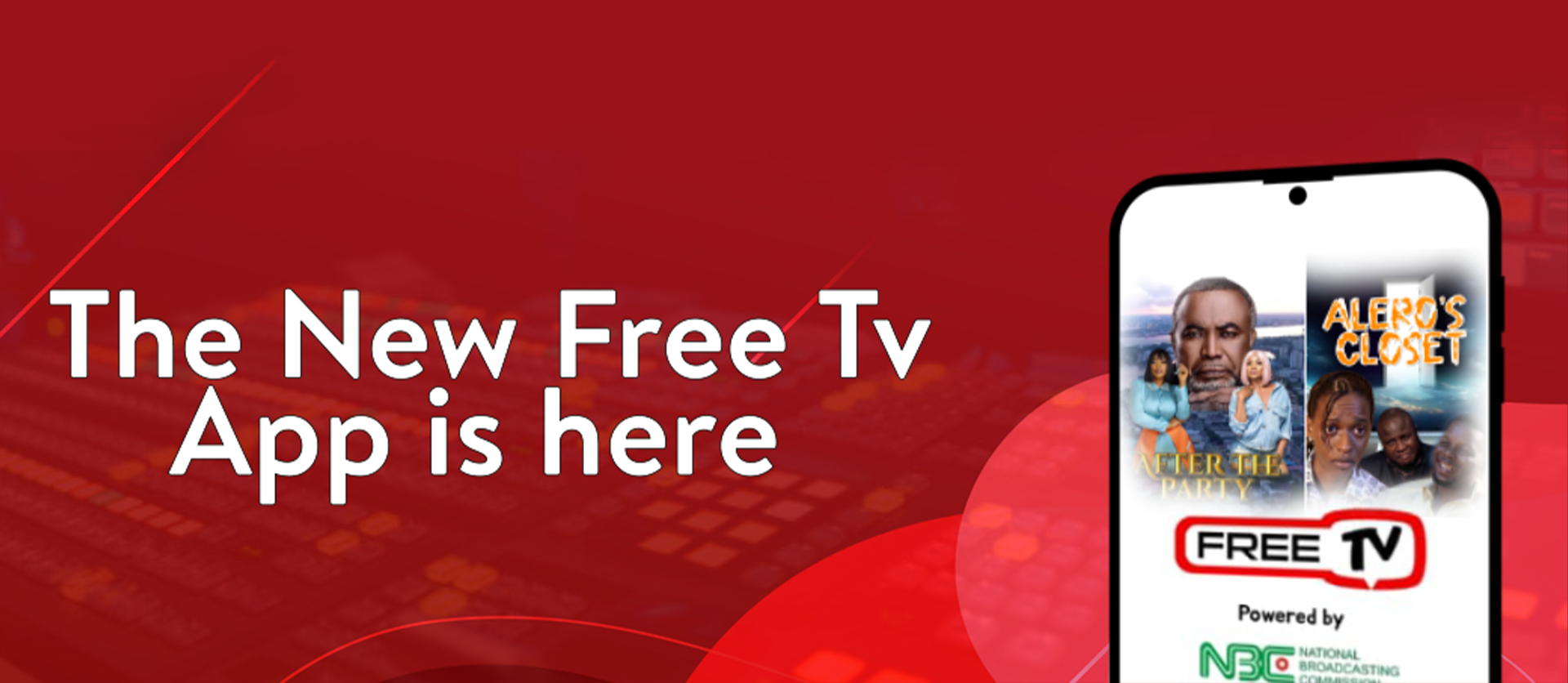
ABUJA — In a massive structural shake-up to the West African media and digital economy landscape, the Federal Government of Nigeria has officially launched FreeTV.
Announced on June 17, 2026, the breakthrough broadcasting platform rolls out over 100 high-definition (HD) channels covering news, sports, entertainment, and education—completely eliminating the burden of recurring monthly subscription fees.
The landmark initiative represents the definitive climax of Nigeria’s long-awaited Digital Switch Over (DSO) program. By transitioning the national broadcasting architecture from legacy analogue signals to a robust digital terrestrial television (DTT) network, the government is effectively democratizing high-quality media access for millions of households nationwide.
The Economic and Functional Stack of FreeTV
The operational framework of FreeTV is explicitly engineered to bypass the premium, subscription-heavy models that have traditionally locked lower-income demographics out of high-tier digital content.
- The Zero-Subscription Moat: Unlike legacy pay-TV operators (such as MultiChoice’s DStv/GOtv or StarTimes) which require continuous monthly renewals, FreeTV operates on a “Free-to-Air” (FTA) model.
- The One-Time Box Framework: Consumers only need to make a single, one-time purchase of a specialized, subsidized FreeTV Digital Set-Top Box (decoder). Once connected to a standard UHF antenna, the entire bouquet of 100+ channels is permanently unlocked.
- The Annual Access Fee: To maintain infrastructure overheads, emergency alert features, and system updates, the platform utilizes a minimal, single annual token fee (pegged at a fraction of a standard monthly pay-TV subscription), ensuring the network remains completely self-sustaining without straining household budgets.
The Macro Transmission: Unlocking the Creative and Local Ad Stack
The launch of a free, 100-channel digital network introduces major macroeconomic benefits across Nigeria’s media, advertising, and creative sectors.
1. Hyper-Localized Content Monetization: With over 100 channel slots available, local content creators, indigenous language filmmakers, and regional news networks now possess an unprecedented distribution pipeline. This massive expansion directly complements Nigeria’s position as a global streaming powerhouse, as highlighted by the steady growth of its Motion Pictures and Sound Recording sectors (expanding 8.86% in Q1 2026).
2. Revolutionizing the Advertising Matrix: The creation of a massive, unified viewer base spanning tens of millions of homes provides a highly lucrative playground for corporate advertisers. Fast-moving consumer goods (FMCG) brands, fintech platforms, and logistics corporations can now deploy targeted, national advertising campaigns at a scale and depth never before achieved on analogue television.
The Operational Overlay: Aligning with the 2026 Reality
The nationwide rollout of FreeTV matches the fast-paced changes seen in the broader mid-2026 economic environment.
- The Disinflation Tailwind: With headline inflation dropping to 15.93% in May, the timing of FreeTV provides direct economic relief. For the squeezed Nigerian consumer, cutting out monthly television bills offers immediate relief to household disposable income, allowing families to redirect scarce funds toward food and healthcare.
- The Energy Efficiency Profile: The newly deployed FreeTV set-top boxes are designed with low-voltage power architectures. For residential hubs and small retail shops operating on decentralized Solar-Hybrid systems, the minimal energy draw of these digital boxes ensures they can run around the clock without draining local battery storage.
The Digital Horizon
Nigeria’s launch of FreeTV marks a historical milestone in bridging the country’s digital divide.
By replacing obsolete analogue infrastructure with a modern, 100-channel digital network, the state is not only upgrading entertainment delivery but also establishing a critical pipeline for national information dissemination, distance learning, and corporate advertising.
In the newly re-priced economic landscape of 2026, FreeTV stands out as a highly innovative blueprint for public-sector infrastructure modernization.