








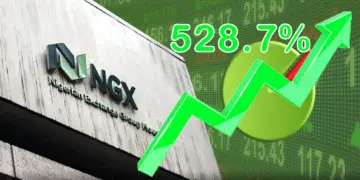








LAGOS — The Nigerian Exchange (NGX) has maintained a historic bull run through the first five months of 2026, with the All-Share Index hovering between the 249,000 and 252,000 range and delivering a broad market Year-to-Date (YTD) return exceeding 60%.
Driven by the Central Bank of Nigeria’s aggressive monetary policy decisions—maintaining the Monetary Policy Rate (MPR) at 26.5%—and massive local liquidity, institutional investors are pivoting heavily into equities as a high-conviction “Sovereign Shield” against local inflation.
According to data compiled up to late May 2026, a mix of manufacturing, health technology, and strategic financial institutions have dominated the performance leaderboard, with the top gainers delivering triple-digit returns that far outpace macro inflationary pressures.
The 2026 Leaders: Breaking Down the Top 10 Performances
The alpha generated in the market this year is split between low-float penny stocks experiencing sharp momentum rallies and fundamentally sound heavyweights capitalising on corporate restructurings and strong earnings profiles.
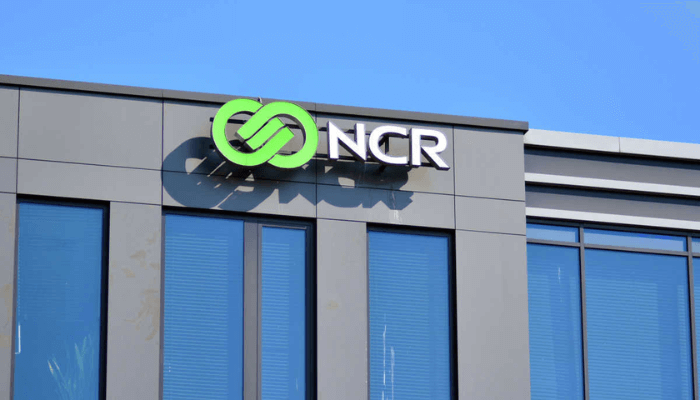
1. NCR Nigeria PLC Leading the entire exchange with an astronomical gain, NCR has captured retail and institutional attention alike. The electronic technology provider has benefited from the aggressive push toward localized financial hardware and digital security integrations across commercial banking networks.
2. Eunisell Interlinked Plc Positioned firmly in the producer manufacturing space, Eunisell has ridden a massive wave of industrial demand. As manufacturing hubs look for domestic alternatives for specialized production chemicals and engineering components, its stock price has broken through multiple resistance ceilings.
3. Mecure Industries PLC A stellar performer in the health technology sector, Mecure has gained significant traction due to expanding domestic pharmaceutical manufacturing facilities. Its focus on diagnostic infrastructure and local processing has insulated it from broader foreign exchange supply bottlenecks.
4. SCOA Nigeria PLC The consumer durables player has experienced a dramatic turnaround. Restructuring initiatives and new logistics partnerships within the expanding construction and agricultural sectors have fueled investor confidence, driving its valuation up multi-fold.
5. Berger Paints Nigeria PLC A massive favorite in the process industries sector, Berger Paints has posted phenomenal returns. The company’s pricing power and strong distribution network have allowed it to pass through input costs effectively, preserving margins despite volatile raw material trends.
6. R.T. Briscoe Plc Operating across the retail trade and automotive infrastructure space, R.T. Briscoe has seen a substantial surge. Renewed focus on commercial vehicle servicing and industrial equipment sales has aligned perfectly with the ongoing logistics expansion across Nigeria.
7. UAC of Nigeria PLC (UACN) One of Nigeria’s oldest conglomerates, UACN has re-emerged as a major market force, backed by a “Strong Buy” analyst consensus. Strategic realignments within its consumer non-durables and packaged food portfolios have optimized operational efficiency.
8. Nigerian Exchange Group PLC (NGXGROUP) As the exchange operator itself, NGX Group has directly captured the financial dividend of the 2026 bull run. Surging transaction volumes, increased listings, and higher market participation have translated directly to an expanding bottom line.
9. DEAP Capital Management & Trust Plc Representing the financial services boutique space, DEAP Capital has experienced momentum-driven interest as asset managers across the country see their Total Asset Values surge amid the wider capital market boom.
10. Red Star Express PLC Rounding out the top ten, the logistics giant has capitalized on the massive e-commerce and intra-state distribution needs generated by the expanding African Continental Free Trade Area (AfCFTA) frameworks and local distribution pipelines.
The Architectural Drivers of the 2026 Bull Run
The massive gains realized by these top-performing equities are supported by systemic changes in how the Nigerian capital market operates.
The Shift to T+1 Settlement: Beginning June 1, 2026, the Securities and Exchange Commission (SEC) is officially transitioning the secondary market across the NGX to a T+1 (Trade plus One Day) settlement cycle.
This structural modernization replaces the legacy T+2 system, immediately unlocking billions in trapped capital and reducing counterparty risk. By accelerating the velocity of liquidity, this change is expected to amplify the trading momentum for high-performing stocks.
The “Offline” and Energy Resilience Premium: With global oil prices trading at elevated benchmarks, companies that have minimized their operational overhead are winning the valuation game.
Investors are actively paying a premium for firms that have optimized their logistics stacks or successfully transitioned their factories and hubs to decentralized solar-hybrid systems, protecting their margins from the erratic state grid.
Navigating the Mid-Year Matrix
As the market moves into the second half of 2026, the critical question for portfolio managers is whether this historic run is entirely backed by corporate fundamentals or if it is approaching an overheating phase.
The aggressive liquidity mop-ups by the Central Bank of Nigeria—including a recent N3.69 trillion OMO (Open Market Operations) bill auction—indicate that the government is intent on keeping a tight rein on systemic liquidity.
For investors, the concentration of capital in top-tier performers underscores the necessity of a selective stock-picking strategy, ensuring that equity allocations remain anchored in companies with real cash flows, solid defensive moats, and a clear path toward localized supply chains.