























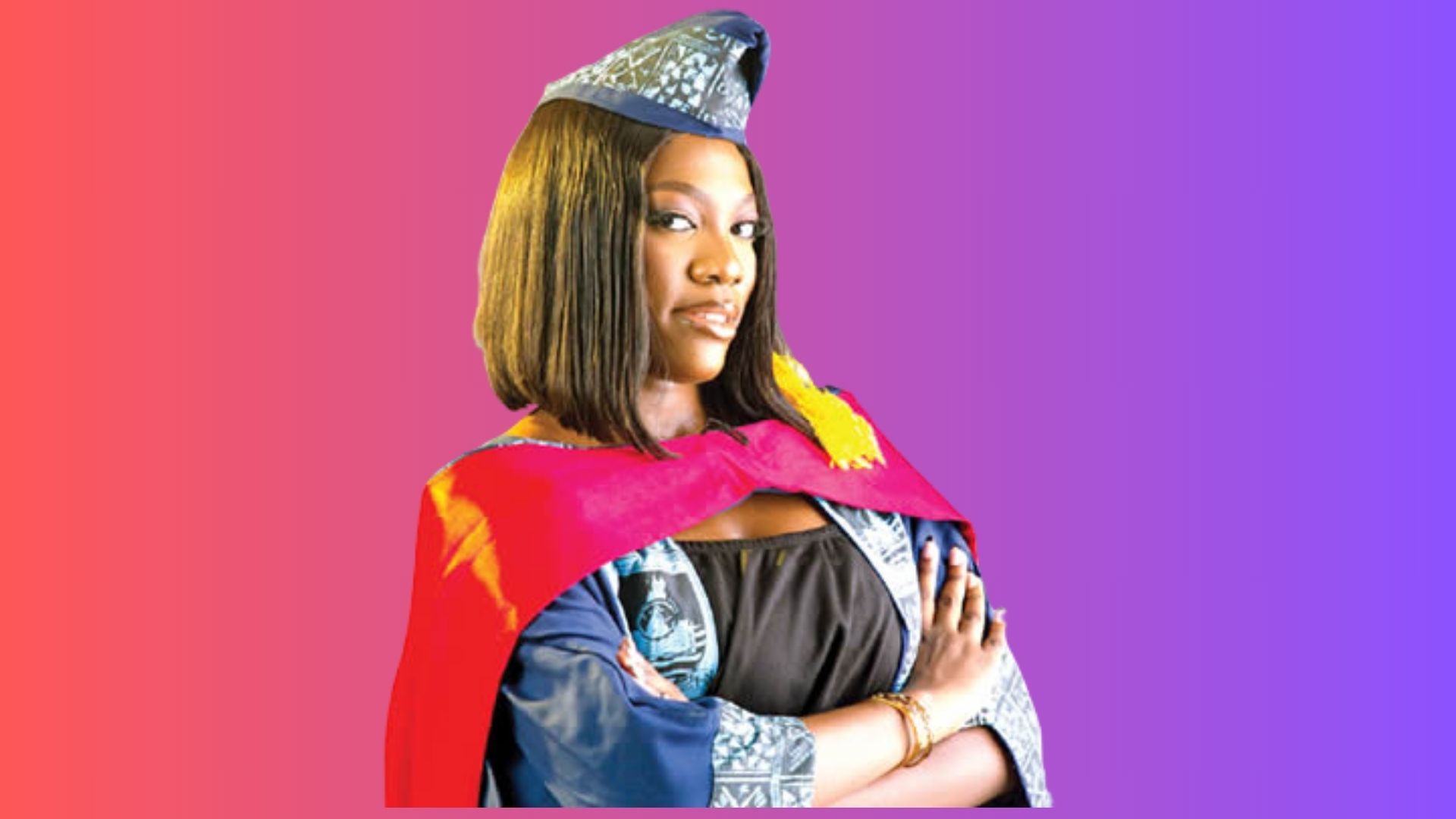
At 18, Isioma Nwosu thought her career was over. Not because of some dramatic teenage heartbreak or existential crisis, but because she scored two points—just two measly points—short of her dream medical school admission.
For a person who had never tasted academic defeat, who had been the valedictorian of her secondary school, this felt like falling from grace in the most public way possible.
The irony is almost cinematic.
“The news of my repeat spread like wildfire in my secondary school,” Nwosu recalls, her voice still carrying the weight of that humiliation. “A valedictorian writing UTME again? It was a bitter pill to swallow. I thought I had failed in life.”
But here’s the thing about failure—sometimes it’s just life’s way of redirecting you toward something better.
Five years later, Nwosu graduated as the overall best student of Lagos State University with a staggering 4.93 CGPA in Biochemistry, a field she’d never even heard of when she reluctantly accepted admission.
The Weight of Being “The Smart Girl”
What Nwosu’s story reveals goes far beyond individual triumph. It exposes the crushing psychological burden carried by high-achieving women, particularly in cultures where academic excellence isn’t just celebrated—it’s expected, demanded, and used as a measure of worth.
“I feel that intelligence is in-built,” Nwosu explains with characteristic directness. “Ever since primary school down to university, I don’t know what it feels like not to be first.”
That statement might sound like bragging to some, but listen closer. There’s an almost haunting quality to never knowing anything but perfection. When you’ve built your entire identity around being the best, what happens when you’re not?
For Nwosu, it meant a brutal reckoning with reality. After her initial JAMB setback, she found herself in an unfamiliar position—having to prove herself all over again. The experience was “very depressing,” she admits, but it also became the foundation for something greater.

The Biochemistry Awakening
Talking about irony, Nwosu, desperate to study medicine, was offered admission to study Biochemistry—a field so foreign to her that she’d literally never heard of it. Her first reaction? “My heart broke the second time.”
But sometimes heartbreak is just the prelude to breakthrough. The turning point came during a seemingly routine Physics 101 lecture when a professor made an offhand comment that would change everything: “Some of you didn’t choose this course you are studying.
Why don’t you prove to the school that you deserve the course you wanted?”
“I held on to that,” Nwosu says, “and I was like, ‘I’m going to prove to this school that I will be the best at this Biochemistry.'”
But the journey wasn’t without its problems, particularly when it came to the social aspects of university life that most students take for granted.
The Social Sacrifice
“No. I don’t have a social life. I buried my head in books,” Nwosu states matter-of-factly when asked about balancing academics with social activities. It’s a stark admission that highlights one of the unspoken truths about academic excellence—it often comes at the cost of everything else.
The pattern is telling: In her first year, she achieved a perfect 5.0 GPA. By her third year, when she started attending “some gatherings and parties,” her performance dipped slightly. The correlation wasn’t lost on her.
Yet Nwosu’s approach wasn’t entirely isolationist. She understood something crucial that many high achievers miss: “No matter how brilliant you may be, you might be slacking in some area while your coursemate may be better in the area.”
This humility—the willingness to reach out for help despite being at the top of her class—may be one of the key factors that separated her from other high performers.
“Many times, I reach out to my coursemate for explanation when I didn’t understand what lecturers was teaching,” she explains. “If I had been full of pride and didn’t go to meet these people, I don’t think I would have broken this record.”
The Valedictorian Success Paradox
Nwosu’s story raises a fascinating question: Are valedictorians actually more successful in life? The research is surprisingly mixed.
While valedictorians typically perform well in traditional academic and professional settings, they’re rarely the ones who become groundbreaking entrepreneurs or revolutionary thinkers.
Perhaps that’s because the skills that make you a valedictorian—following rules, meeting expectations, optimizing for grades—aren’t necessarily the same skills that lead to innovation or risk-taking. Valedictorians are often excellent at playing the game as it exists, but less likely to create entirely new games.
But Nwosu’s story suggests a different possibility. What if the most successful valedictorians are the ones who learn to fail early and adapt quickly?
Her initial “failure” to get into medical school forced her to develop resilience and flexibility—qualities that served her well when she needed to excel in an entirely different field.
The Female Factor
There’s also the gender dimension to consider. Research consistently shows that high-achieving women face unique pressures and expectations.
They’re more likely to experience imposter syndrome, more likely to attribute their success to luck rather than skill, and more likely to internalize failures as personal shortcomings.
Nwosu’s initial reaction to her JAMB setback—”I thought I had failed in life”—is textbook perfectionist thinking, a mindset that disproportionately affects women. The fact that she was able to channel that devastation into motivation speaks to a particular kind of mental toughness.
“You can achieve whatever you put your mind to,” she tells current students. “Once you have the mindset, trust me, you can achieve anything in this life.” It’s advice that sounds almost too simple, but coming from someone who lived it, it carries weight.
The Leadership Paradox
What makes Nwosu’s story even more compelling is that she didn’t just focus on grades. From her second year through graduation, she served as department speaker, was a member of multiple student organizations, and held honorary positions.
These roles taught her “time management” and forced her to “dedicate extra time to academics.”
This is counterintuitive—taking on more responsibilities to improve academic performance—but it speaks to a crucial insight about high achievement. Sometimes the pressure of additional commitments forces you to operate at a higher level of efficiency and focus.
The Full Picture
Nwosu’s journey from devastated pre-med hopeful to record-breaking biochemistry graduate isn’t just a personal success story. It’s a masterclass in resilience, adaptability, and the art of turning setbacks into comebacks.
Her advice to fellow graduates cuts to the heart of what really matters: “You completed this phase. You are resilient, capable and prepared for the future. The world is waiting for your greatness and manifestation.”
That’s not just motivational speaking—it’s hard-earned wisdom from someone who learned that sometimes the path you didn’t choose becomes the one that leads exactly where you need to go.
For every student struggling with unmet expectations, every high achiever grappling with their first taste of failure, Nwosu’s story offers something invaluable: proof that your backup plan might just be your breakthrough in disguise.
After all, the best stories aren’t about people who never failed—they’re about people who failed, got back up, and then exceeded even their own wildest expectations.
Isioma Nwosu graduated as the overall best student of Lagos State University’s 2023/2024 academic session with a 4.93 CGPA in Biochemistry. She currently serves as an inspiration to students across Nigeria and beyond, proving that sometimes the detour becomes the destination.