



















There’s something profoundly broken when the people tasked with educating Nigeria’s future leaders can’t get paid on time. And it’s getting worse.
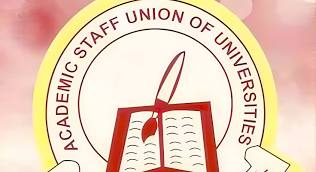
The Academic Staff Union of Universities (ASUU) has drawn a line in the sand—again. And have threatened to strike.
This time, it’s not about funding or infrastructure, though those battles rage on. It’s about something far more basic: getting paid for work already done.
June salaries remain unpaid across multiple universities, and ASUU President Chris Piwuna isn’t mincing words about what comes next.
“This is not an indefinite strike,” Piwuna declared in a recent interview with Premium Times. “We have told our members to go by the ‘no pay, no work’ policy. If salaries are not paid by the end of July, we will stop work again. It’s that simple.”
Simple, perhaps. But devastating? Absolutely.
The Domino Effect: Universities Grinding to a Halt
The current situation reads like a patchwork of academic chaos. The University of Jos? Back to work after salaries were cleared. University of Abuja? Operating normally after payments landed just yesterday.
But for institutions still waiting on June wages? Empty lecture halls and frustrated students.
“Those who commenced the strike and their salaries have been paid are back to work,” Piwuna confirmed. “But all those who are being owed June salary are not at work.”
This isn’t some abstract labor dispute—it’s a real-time experiment in educational disruption.
Students at affected universities are watching their academic calendars collapse while their professors enforce what amounts to a basic principle: you don’t work for free.
The IPPIS Exodus: A Bureaucratic Nightmare
Here’s where things get interesting—and infuriating. The salary delays didn’t happen in a vacuum.
They began after ASUU pulled out of the federal government’s Integrated Payroll and Personnel Information System (IPPIS), a move that was supposed to grant universities more autonomy but instead created a payment bottleneck.
Piwuna doesn’t mince words about who’s to blame: “Since we left the IPPIS, our salaries have deliberately been delayed by the Office of the Accountant General of the Federation.”
Deliberately. That’s not bureaucratic inefficiency—that’s retaliation.
The backstory here matters. ASUU fought for years to escape IPPIS, arguing that the centralized payment system violated university autonomy and failed to accommodate the peculiarities of academic work.
After an eight-month nationwide strike in 2022—yes, eight months—the government finally capitulated in December 2023, approving universities’ removal from IPPIS.
The union got what it wanted: the right to use the University Transparency and Accountability Solution (UTAS), a platform designed specifically for academic institutions. But apparently, winning the battle didn’t end the war.
The Accountability Gap: Who’s Really in Charge?
There’s a bitter irony in a system called “University Transparency and Accountability Solution” creating more opacity and less accountability. The transition from IPPIS to UTAS was supposed to streamline payments, not create new delays.
Instead, we’re seeing a classic case of institutional punishment. The Office of the Accountant General appears to be making ASUU pay for its successful rebellion against IPPIS. And the cost? Nigeria’s university system hanging in the balance.
This isn’t sustainable. Every month of delayed payments pushes more universities toward work stoppages. Every semester disrupted by strikes pushes more students toward alternative education paths—often abroad.
The Bigger Picture: Nigeria’s Brain Drain Accelerates
While government officials and union leaders play administrative chess, Nigeria’s best and brightest are making other plans. The country’s brain drain, already reaching crisis levels, gets worse every time universities shut down.
Students who can afford it are increasingly looking elsewhere for stable education. Faculty members, tired of fighting for basic pay, are exploring opportunities in countries that actually value higher education.
The long-term cost of these salary delays far exceeds the immediate financial savings.
What’s Next: A July Deadline with Real Consequences
Piwuna’s warning carries weight because ASUU has proven it’s willing to follow through. The union’s track record includes multiple successful strikes, including that marathon eight-month action in 2022. They’re not bluffing.
“Just if at the end of July our salaries are not paid again, we would again stop work,” Piwuna stated. The message is clear: pay up, or watch Nigeria’s university system grind to another halt.
The federal government has a choice. It can treat this as another labor dispute to be managed through delays and half-measures. Or it can recognize that paying educators on time isn’t a favor—it’s a fundamental requirement for any functioning educational system.
Time for Adult Supervision
Nigeria’s university crisis isn’t really about IPPIS versus UTAS, or even about specific salary delays. It’s about whether the country is serious about higher education or content to let it deteriorate through benign neglect.
The current situation is unsustainable. Universities can’t operate when faculty don’t know if they’ll be paid. Students can’t plan their futures when academic calendars are constantly disrupted.
And Nigeria can’t compete globally when its higher education system is in perpetual crisis.
The July deadline isn’t just about ASUU’s patience—it’s about Nigeria’s priorities. Will the government finally treat university funding as essential infrastructure? Or will we see another cycle of strikes, negotiations, and temporary fixes?
Time will tell. But time is running out.
The Academic Staff Union of Universities represents over 49,000 academic staff across Nigeria’s public universities. Their ongoing dispute with the federal government over payment systems and salary delays has disrupted academic activities multiple times over the past decade.