






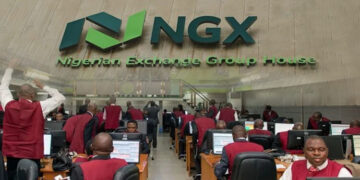

















LAGOS — A fundamental shift is occurring in the financial behavior of the Nigerian middle class. According to a market analysis published on April 3, 2026, financial experts have identified a growing trend where the Nigerian Exchange (NGX) is no longer viewed merely as a speculative platform, but as a critical component of the national savings architecture.
As traditional savings accounts struggle to keep pace with inflation and currency volatility, domestic investors are increasingly allocating their “Long-Term Capital” into dividend-yielding stocks and blue-chip equities to preserve their purchasing power.
The Migration from Cash to Equity
The transition from “Liquid Cash” to “Equity Assets” is driven by a search for real returns in an environment where the Naira is under pressure from $120 oil and high import costs.
Why Stocks are the New Savings Account:
- Dividend Yields vs. Interest Rates: With Tier-1 banks like Zenith Bank proposing record dividends of ₦8.75, the “Cash-on-Cash” return from dividends often exceeds the interest offered by standard savings or fixed-deposit accounts.
- Capital Appreciation as an Inflation Hedge: Historically, the NGX All-Share Index has demonstrated a strong “Beta” to inflation, meaning stock prices tend to adjust upward as the cost of goods and services rises, protecting the investor’s “Wealth Stack.”
- Fractional Investing: The rise of digital brokerage apps has democratized access, allowing individuals to save in small increments by purchasing fractional shares of high-value companies.
The Institutional Push: PFAs and Mutual Funds
A significant driver of this “National Savings” trend is the activity of Pension Fund Administrators (PFAs). In 2026, PFAs have increased their exposure to the Nigerian equities market, moving away from a heavy reliance on government bonds.
By channeling a larger portion of the mandatory pension contributions into the stock market, the “Institutional Stack” is effectively turning the stock market into the collective retirement vault for millions of Nigerian workers. This provides the market with a “Liquidity Floor,” as pension funds are “Long-Only” investors who tend to hold their positions through short-term market cycles.
Digital Integration and the “Retail Revolution”
The guide highlights how technology has removed the “friction” of stock market participation. In 2026, the integration of trading platforms with mobile banking apps means that “Investing” is now just another tab next to “Transfers” and “Bill Payments.”
Actionable Insights for Retail Savers:
- Dollar-Cost Averaging: Instead of trying to “time” the market during periods of $120 oil volatility, experts recommend consistent monthly purchases to smooth out the entry price.
- Sector Diversification: Savvy savers are diversifying across the “Industrial Stack”—combining high-yield banking stocks with resilient consumer goods and telecommunications equities.
- The Reinvestment Loop: Many investors are now opting for “Dividend Reinvestment Plans” (DRIPs), where their ₦8.75 or 10 kobo payouts are automatically used to buy more shares, creating a powerful compounding effect over time.
A Structural Financial Transformation
The recognition of stocks as a national savings component marks the “De-mystification” of the Nigerian capital market. For decades, the stock market was seen as the playground of the elite; in 2026, it has become the “Digital Vault” for the average worker.
This maturation of the financial ecosystem is essential for building a resilient domestic economy. By keeping savings within the local equity market rather than seeking “Flight to Safety” in foreign currencies, Nigerians are providing the capital needed for local firms to expand. As the 2026 cycle continues, the strength of the NGX will likely be the most accurate barometer of the nation’s collective financial health.