





















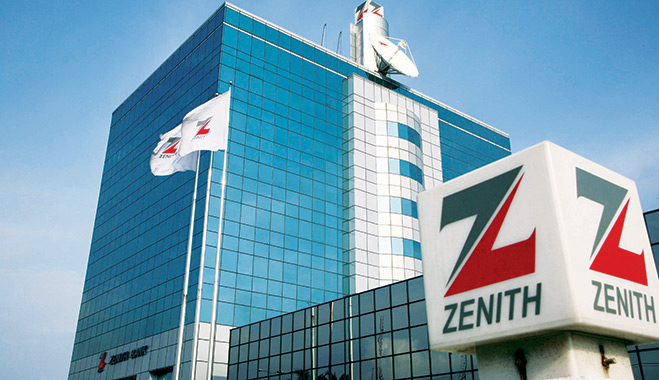
LAGOS — In a historic display of banking dominance, Zenith Bank PLC has become one of the first Nigerian financial institutions to cross the trillion-naira profit threshold. According to the audited full-year 2025 financial results published on April 7, 2026, the bank’s Profit After Tax (PAT) surged to an unprecedented ₦1.26 trillion.
To reward its shareholders for this landmark performance, the board has proposed a final dividend of ₦8.75 per share, bringing the total dividend for the 2025 financial year to a record high.
This move reinforces Zenith Bank’s position as a premium “Dividend King” on the Nigerian Exchange (NGX) and sets a formidable benchmark for the ongoing banking recapitalization exercise.
The Anatomy of a Trillion-Naira Profit
The leap in profitability is the result of a “Perfect Storm” of high-interest rates, expanded digital banking volumes, and significant gains from foreign exchange revaluations.
Core Performance Metrics:
- Interest Income: Surged significantly as the bank leveraged the Central Bank of Nigeria’s (CBN) elevated Monetary Policy Rate (MPR) to optimize its massive lending portfolio and fixed-income investments.
- Non-Interest Revenue: Driven by a boom in electronic transition fees and trade finance commissions, which remain core strengths of the Zenith brand.
- Cost-to-Income Efficiency: Despite the inflationary environment in Lagos and across the federation, the bank maintained a disciplined operational stance, ensuring that revenue growth far outpaced the rise in overheads.
The Dividend Magnet: Analyzing the ₦8.75 Payout
The ₦8.75 final dividend is a clear signal of the bank’s capital “Overhang”—a state where a bank has significantly more capital than required for its immediate operations.
Strategic Implications for Shareholders:
- Yield Leadership: At the current market price, Zenith Bank offers one of the most attractive dividend yields in the Tier-1 banking space (FUGAZ), making it a top pick for Pension Fund Administrators (PFAs) and foreign portfolio investors.
- Reinvestment Capacity: Even after paying out over ₦270 billion in total dividends, the bank’s retained earnings remain robust enough to support its capital base as the CBN mandates higher minimum capital thresholds for 2026.
Digital Transformation and Market Share
A significant portion of the growth was fueled by the bank’s “Retail-Led” digital strategy. In 2025, Zenith Bank saw a record number of new account openings and a massive uptick in USSD and mobile app transaction values.
This digital-first approach has allowed the bank to lower its “Cost-of-Funds” by attracting more low-interest savings deposits from a broader demographic. Furthermore, its corporate banking division continues to dominate the “Blue-Chip” lending market, providing the stable, high-value assets that underpin its trillion-naira bottom line.
Recapitalization and Future Outlook
The 2025 results arrive at a critical juncture for the Nigerian banking sector. With the CBN’s new capital requirements looming, Zenith Bank is demonstrating that it doesn’t just meet the standards—it defines them.
The bank’s massive internal capital generation (the ₦1.26 trillion profit) means it can comfortably meet the ₦500 billion minimum capital requirement for international banks without the same level of “Dilution Stress” that smaller competitors might face. This fiscal “Fortress” allows the bank to remain aggressive in its expansion plans into other African markets and international financial hubs like London and Dubai.
The New Tier-1 Benchmark
The 2025 performance marks a “Decoupling” of Zenith Bank from the rest of the market. While the broader economy has faced the challenges of $120 oil and Naira volatility, the bank has successfully navigated these risks to deliver world-class returns.
For the Nigerian investor, Zenith Bank has transitioned from a standard financial stock to a “Sovereign-Grade” asset. The ₦8.75 dividend is not just a reward; it is a demonstration of the sheer earning power that comes with being a market leader. As the 2026 financial cycle unfolds, the focus will now shift to whether the rest of the “FUGAZ” group can close the gap or if Zenith will continue to operate in a trillion-naira league of its own.