





















ABUJA — Nigeria’s macroeconomic engineering has taken a high-stakes geopolitical turn. Following the central bank’s successful drive to cool domestic inflation down to 15.93%, the Federal Government has officially formalized a blockbuster $5 billion currency swap agreement with Abu Dhabi (United Arab Emirates).
As analyzed by financial analysts on June 17, 2026, the massive liquidity injection is designed to act as an immediate stabilization mechanism for the country’s external reserves.
However, the deal has ignited an intense debate across the financial sector: is this structural maneuver a vital financial painkiller to bridge the country’s transition into a low-oil-revenue environment, or is it an opaque, high-yielding debt trap that mortgages future fiscal sovereignty?
The Anatomy of the Swap: How the Mechanics Work
A currency swap is not a standard concessionary loan; it is a reciprocal financial transaction where two sovereign entities exchange predetermined volumes of their respective currencies to facilitate trade and stabilize liquidity pipelines.
┌─────────────────┐    $5 Billion USD / AED Equivalent   ┌────────────────┐
│                 │ ───────────────────────────────────► │                │
│    Abu Dhabi    │                                      │    Nigeria     │
│   Authorities   │ ◄─────────────────────────────────── │  (CBN Stack)   │
└─────────────────┘      Equivalent Naira Liquidity       └────────────────┘
Under this framework, the Central Bank of Nigeria (CBN) deposits an equivalent value of Naira into an escrow structure managed by Abu Dhabi banking authorities, receiving an immediate credit of $5 billion worth of UAE Dirhams (AED) or hard US Dollars.
The agreement includes a strict “Buy-Back” timeline, requiring both central banks to reverse the transaction at a specified future date using the exact same exchange rate, plus a negotiated institutional yield spread.
The Case for the “Financial Painkiller” (The Bull Argument)
Proponents of the deal—including central bank planners and institutional asset managers currently riding the high-yield 26.5% Monetary Policy Rate (MPR) environment—argue that the swap provides critical defensive insulation for the local economy.
- Defending the FX Moat: The $5 billion injection gives the CBN immediate, high-velocity firepower to intervene in the official foreign exchange market (NAFEM). This structural backing prevents speculative runs on the Naira, preserving the hard-won stability achieved over the first half of 2026.
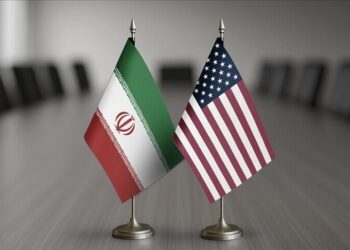
- The $65 Crude Cushion: Following the historic U.S.–Iran peace accord, global oil prices have corrected sharply to the $65–$70 range. Because this price collapse compresses Nigeria’s traditional nominal dollar windfalls from crude exports, the Abu Dhabi swap acts as an artificial liquidity bridge. It replaces lost immediate oil revenues, giving non-oil sectors time to scale up their export capacity.
- Facilitating Low-Friction Bilateral Trade: A significant portion of Nigeria’s corporate import stack—ranging from advanced technology inputs to heavy machinery parts—flows directly through Dubai’s logistics hubs. Settling these transactions directly in Dirhams bypasses the traditional bottleneck of scrambling for scarce US Dollars, significantly lowering transaction overheads for Nigerian merchants.
The Case for the “Debt Trap” (The Bear Argument)
Conversely, a vocal contingent of sovereign risk analysts and macroeconomic purists warn that the deal introduces dangerous hidden vulnerabilities to Nigeria’s long-term balance sheet.
- The Opaque Collateral Matrix: The primary concern centers on the undisclosed terms of the swap. Skeptics point out that Middle Eastern sovereign funds rarely issue $5 billion liquidity lines without securing ironclad underlying guarantees. If the deal is backstopped by future oil production allocations or stakes in prized national infrastructure (such as national aviation hubs or state energy assets), a prolonged failure to meet the swap’s buy-back milestones could trigger a painful forfeiture of sovereign rights.
- The Cost of Forward Reversals: While the swap keeps exchange rates fixed on paper, the interest rate spread tied to the deal represents a heavy fiscal burden. Paying out high-yield returns on a $5 billion principal further drains the federal government’s non-oil tax revenues at a time when the consumer base is already heavily squeezed under the current structural reforms.
- Postponing the Structural Fix: Critics argue that relying on multi-billion dollar swaps is an economic painkiller that merely masks deep-seated structural issues. Rather than forcefully re-balancing the nation’s trade balance by aggressively exporting processed goods and scaling up localized manufacturing, temporary currency injections allow policymakers to delay making the difficult, fundamental cuts needed to balance the national budget.
The Strategic Outlook for H2 2026
The $5 billion Abu Dhabi currency swap deal is neither a pure economic miracle nor an immediate fiscal death sentence; it is a high-stakes, time-sensitive tool.
If the CBN uses this $5 billion window to aggressively clear the remaining FX backlogs, support local manufacturers migrating to cost-effective Solar-Hybrid factories, and solidify positive real interest rates, the swap will serve as a brilliant financial painkiller that helped bridge the country into a diversified, post-oil economic era.
However, if the liquidity is wasted defending an overvalued currency line or funding recurrent public overheads, the buy-back deadlines will rapidly transform this Middle Eastern lifeline into a highly restrictive debt trap.
For corporate treasurers and equity investors, tracking the exact deployment of these swap funds will be the single most critical factor in predicting market direction for the remainder of the 2026 fiscal cycle.