

























LAGOS — A deep structural divide has opened up within the Nigerian economy, giving rise to a striking macroeconomic paradox.
According to an extensive market analysis published on June 16, 2026, the current economic landscape under the President Bola Tinubu administration presents two completely different realities: while institutional investors, asset managers, and corporate boards are enjoying a historic, multi-trillion naira windfall, the average Nigerian consumer is facing severe wallet compression and a sharp reduction in real purchasing power.
This widening gap comes even as the country’s headline inflation rate dropped significantly to 15.93% in May 2026 and Real GDP expanded by a healthy 3.89% in Q1. The data shows that the benefits of this economic growth are accumulating heavily at the top of the financial structure, while the household level continues to bear the structural costs of deep fiscal reforms.
The Investor Stack: Capturing the Policy Dividend
For the local and international investor class, the administration’s aggressive policy shifts over the past few years have created a highly profitable environment.
[Tinubu's Macro Reforms] ──► [High MPR (26.5%) & T+1 Settlement] ──► [Sovereign Alpha for Investors]
                                                                                │
                                                   (N945B Monday pullbacks view as minor corrections)
- The Equity Bull Run: Even with temporary corrections—such as the recent N945 billion single-day pull-back driven by a global shift to $65 crude—the Nigerian Exchange (NGX) has kept its status as a top global performer. The All-Share Index has hovered at historic heights above the 250,000 mark, yielding massive triple-digit year-to-date returns for equity mutual funds.
- Positive Real Yields: With the Central Bank of Nigeria maintaining its Monetary Policy Rate (MPR) at 26.5%, the rapid drop of inflation below 16% has created an exceptional “Sovereign Shield” for fixed-income investors. Asset managers are locking in historically high real returns on Treasury bills and OMO auctions, generating risk-free alpha that was virtually impossible to find in previous cycles.
- Corporate Pricing Power: Major listed conglomerates in sectors like downstream refining, cement, and process manufacturing have successfully protected their margins. By passing increased input costs directly down the line, corporate net profits have surged, to the delight of shareholders.
The Consumer Squeeze: The Cost of Structural Adjustment
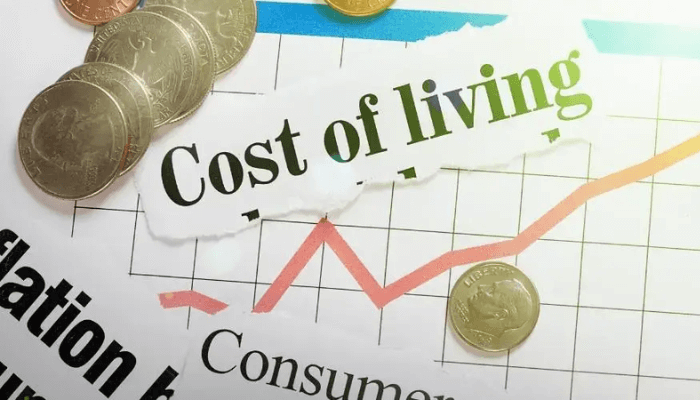
In stark contrast to the booming capital markets, the everyday consumer is experiencing a persistent contraction in disposable income. The reality on the ground highlights why a dropping inflation rate does not immediately translate into an easier cost of living.
- The Price Floor Effect: Disinflation simply means prices are rising slower, not that things are getting cheaper. The cumulative impact of fuel subsidy removals, electricity tariff adjustments, and the currency float has permanently shifted the baseline cost of essential goods. A basket of staples that re-priced upward during the peak of the inflation surge remains at that high level.
- High-Cost Credit Destroys Retailing: While investors enjoy a 26.5% return, small businesses and retail consumers face steep commercial borrowing rates. This credit freeze has limited the expansion of mid-tier traders and heavily suppressed consumer credit, forcing families to rely strictly on nominal cash reserves.
- The Geographic Lottery: As highlighted by recent cost-of-living data, general affordability has become highly fragmented. While residents in agricultural states like Borno or Taraba experience lower local food prices, consumers in major urban centers like Lagos or Abuja face high logistics markups and real estate costs that quickly drain average salaries.
The Corporate Adaptation: Insulating the Middle
Faced with a tapped-out consumer base, forward-looking companies are rewriting their operational playbooks to protect their market share without counting on a quick rebound in household spending.
The primary strategy centers on cutting operational overhead. Businesses are increasingly moving away from volatile state energy grids and costly fuel setups by migrating their logistics hubs and production plants to independent Solar-Hybrid systems.
By locking in predictable power costs, these firms are managing to protect their margins while keeping product prices low enough to avoid pricing out the pinched Nigerian consumer.
The Mid-2026 Outlook
The current economic matrix presents a clear picture: Nigeria’s macro reforms have successfully repaired the state’s financial foundation, stabilized the Naira, and created a paradise for institutional capital. However, the transmission mechanism from capital market wealth to household prosperity remains choked.
As the economy moves into the second half of 2026, the sustainability of the current political and economic balance will depend on whether the administration can transition from investor-centric tightening to consumer-centric relief.
Without targeted interventions to lower retail credit barriers and boost real wages, the “Winning Investor vs. Losing Consumer” dynamic will remain the defining feature of the country’s modern economic story.