
























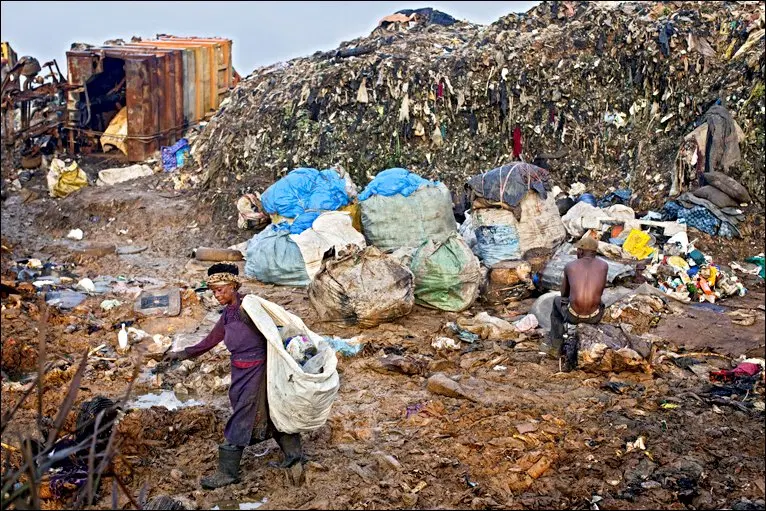
LAGOS / OGUN — In a country grappling with high unemployment, the informal waste collection sector has emerged as a high-potential frontier for self-employment. According to an investigative report on April 7, 2026, scavengers are now earning between ₦5,000 and ₦11,000 daily, with top earners in specialized segments like scrap metal taking home as much as ₦400,000 monthly.
The growth of this “circular economy” is being driven by Nigeria’s need to manage over 2.5 million tons of annual plastic waste and a manufacturing sector that increasingly relies on recycled raw materials to bypass expensive imports.
The Daily Grind: Earnings by Material
The “income floor” for scavengers has risen significantly as the market for PET bottles, cartons, and metals becomes more competitive and structured.
| Material | Rate per Kilogram (Price to Scavenger) | Average Daily Earnings | Focus Areas |
| Colourless Plastic (PET) | ₦250 | ₦7,500 – ₦10,000+ | Party sites, restaurants, dumps |
| Coloured Plastic | ₦200 | ₦5,000 – ₦8,000 | General waste bins |
| Cartons | ₦250 – ₦300 | ₦8,000 – ₦9,000 | Markets (Alaba, Orile), shops |
| Scrap Iron/Metal | Market-Driven | Up to ₦15,000+ | Construction sites, industrial zones |
Key Market Drivers in 2026
1. Industrial Demand for Recycled Inputs
With the Ajaokuta Steel Plant yet to reach full capacity, the local steel industry has turned to scrap metal as its primary raw material. High-grade scrap prices now exceed ₦800,000 per ton, fueling the demand for steel rebar in Nigeria’s construction boom. Similarly, major manufacturers like FAE Limited (West Africa’s largest envelope producer) have highlighted that recycled paper is now a cornerstone of their production pipeline.
2. The Plastic Value Chain ($10 Billion Valuation)
Nigeria’s plastic recycling sector is now valued at approximately $10 billion. Scavengers are the critical first link in this chain, providing the feedstock that is transformed into everything from household products and construction materials to polyester fiber for pillows and textiles.
3. Seasonal Spikes
Earnings often peak during the dry season and festive periods. Scavengers in high-traffic areas like Alaba Market (Lagos) report a surge in empty bottle availability as beverage consumption rises, allowing dedicated collectors to hit their daily targets of 30kg+ much faster.
The Economic and Environmental Impact
- Import Substitution: Recycling saves the country billions of dollars annually by reducing the need to import virgin plastic resins and paper pulp.
- Environmental Protection: By diverting millions of PET bottles from drainage systems and landfills, these informal workers provide a critical public service that prevents urban flooding and marine pollution.
- MSME Potential: Economists suggest that with proper government regulation, these individual scavenging activities could be formalized into Micro, Small, and Medium Enterprises (MSMEs), providing workers with better access to health safety and financial tools.
Challenges: The Shadow of Theft
The industry faces a significant reputational hurdle due to the lack of regulation. The high value of scrap metal has led to increased reports of vandalism, specifically the theft of rails from bridges and train tracks. Stakeholders are calling for a more robust registry and monitoring system to separate legitimate recycling activities from criminal metal poaching.
Scavenging in Nigeria
In 2026, scavenging in Nigeria has shed its image as a desperate last resort to become a viable, low-capital entry point into the “green economy.”
As the sector continues to formalize, these “waste entrepreneurs” are proving that in the face of economic hardship, one person’s trash is truly another’s ₦400,000-a-month treasure.