
























LAGOS — While Nigeria’s headline inflation rate recorded a sharp deceleration to 15.93% in May 2026, the cost of living remains highly fragmented across geographical lines.
According to the latest State-by-State Consumer Price Index (CPI) data published by the National Bureau of Statistics (NBS) and analyzed on June 16, 2026, a clear division persists between high-overhead commercial hubs and regions offering significant structural affordability.
By measuring the combined landing costs of staple food baskets, housing infrastructure, regional transport grids, and energy overheads, the data identifies the top ten states where disposable income goes the furthest.
The Affordability Leaderboard (May 2026)
The most affordable states are heavily concentrated in the North-Central and North-West geopolitical zones, where proximity to primary agricultural production zones drastically reduces the “logistics markup” on food.
1. Borno State Consistently leading the index for regional affordability, Borno recorded the lowest all-item inflation metrics. Structural interventions and localized marketplace dynamics have driven down the baseline cost of essential commodities, making it the most affordable state in the country relative to average purchasing power.
2. Taraba State As an agricultural powerhouse, Taraba benefits from massive food supply lines that bypass expensive middleman networks. The state boasts some of the lowest average retail prices for domestic grains, tubers, and fresh produce.
3. Benue State Living up to its status as the “Food Basket of the Nation,” Benue offers an incredibly cost-effective food stack. Housing and domestic rental yields remain highly accessible compared to southern urban centers, keeping overall household overheads low.
4. Katsina State Katsina ranks high on the affordability matrix due to highly stabilized transport and food commodity prices. The local economy benefits from strong cross-border and regional trade routes that keep staple items in steady, low-cost supply.
5. Plateau State Plateau offers a unique affordability advantage. Its temperate climate allows for the localized cultivation of high-value exotic crops and vegetables, dropping the local cost of a diverse dietary basket significantly below the national average.
6. Kano State Despite its massive population and status as a major commercial nerve center, Kano maintains exceptional affordability due to its highly efficient, high-volume wholesale markets (such as Dawanau). The sheer scale of trade drives down the unit cost of living.
7. Nasarawa State Serving as a vital residential shock absorber for the Federal Capital Territory (FCT), Nasarawa offers a significantly cheaper housing and living stack than neighboring Abuja, while maintaining close economic integration with the capital.
8. Kebbi State Driven by scaled-up localized rice production and agricultural processing plants, Kebbi features highly competitive food pricing and low baseline utility overheads for average households.
9. Jigawa State Jigawa’s affordability is anchored by its low real estate and tenancy costs. The state presents minimal inflationary friction for transport and basic services, making it an ideal environment for budget-conscious civil and private sector workers.
10. Kaduna State Rounding out the top ten, Kaduna strikes an optimal balance between urban infrastructure and affordability. Its diverse agricultural zones and established retail distribution networks help keep everyday household expenses highly manageable.
The Structural Anchors of Low-Cost Living
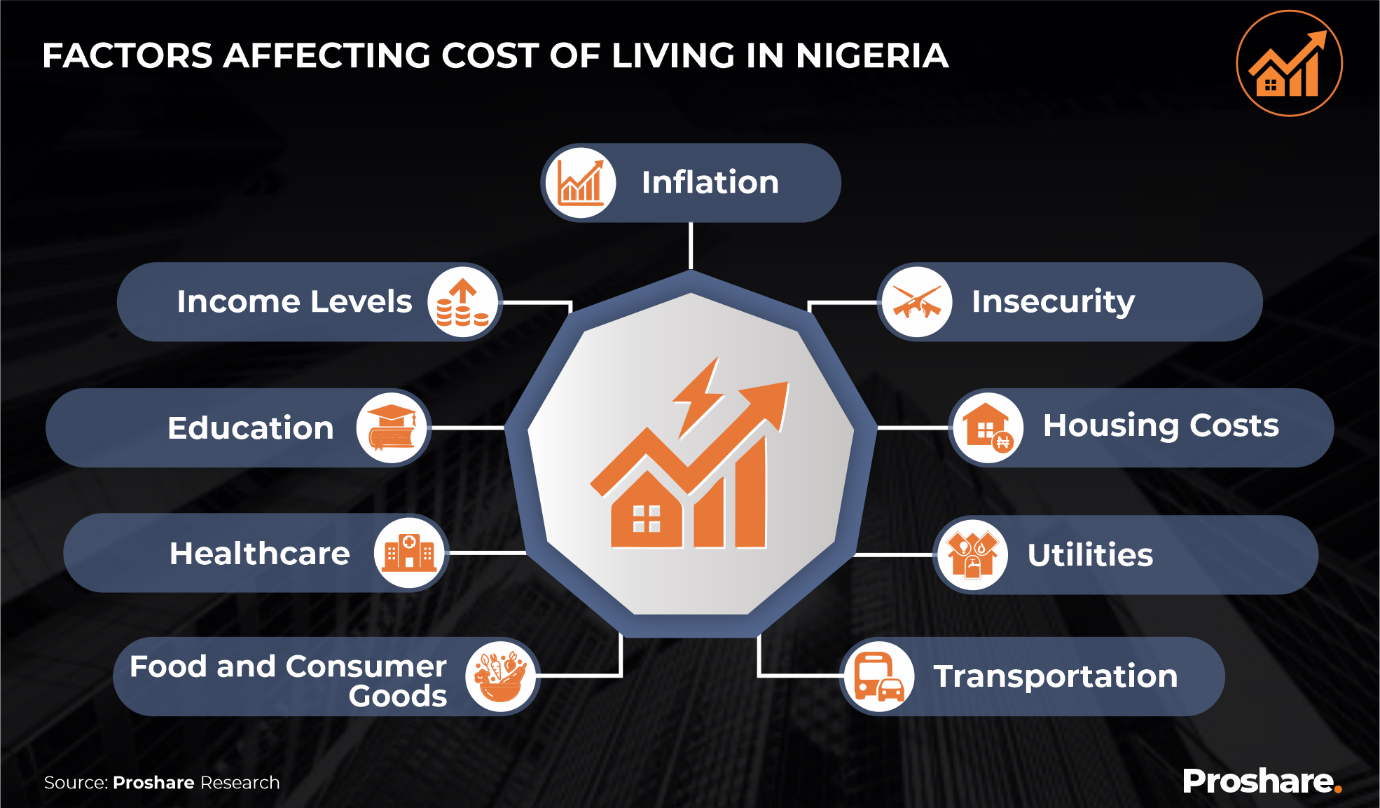
The wide gap in living costs between these ten states and high-overhead zones like Lagos, Rivers, or Abuja is driven by two main factors:
- The Logistics and Transport Discount: With global oil prices pulling back to the $65–$70 range following the U.S.–Iran peace deal, transport margins are adjusting. However, states that produce their own food entirely avoid the interstate transit tolls, fuel surcharges, and highway logistics markups that inflate food shelf prices in southern ports.
- The Energy and Infrastructure Moat: In many of these affordable states, small businesses and residential hubs have adapted to erratic state grids by increasingly leaning into decentralized Solar-Hybrid systems. By locking in predictable, zero-fuel energy costs, local micro-economies are effectively insulating themselves from utility price spikes.
The Macro Outlook
For remote professionals, expanding digital businesses, and logistics operators utilizing the African Continental Free Trade Area (AfCFTA) corridors, this geographical cost data provides a strategic roadmap for capital allocation.
Operating from high-affordability states allows organizations to drastically lower human capital overheads while maximizing the real value of local salaries. As disinflation continues to filter through the economy in the second half of 2026, these ten regions are well-positioned to maintain their status as the primary consumption safe-havens of the federation.