























l’ll never forget that humid afternoon in Lagos when my nephew, Chisom, first showed me his “classroom” – it was just his mother’s old smartphone propped against a stack of books on their dining table.
“Uncle, see my teacher!” he exclaimed, pointing at the tiny screen where his mathematics teacher was explaining fractions through a Zoom call. l couldn’t help but marvel at how far we’d come from my own days of dusty chalkboards and crowded classrooms at Federal Government College.
That moment in 2022 crystallized something for me: Nigeria’s educational landscape was undergoing a seismic shift, and l was watching it happen in real-time.
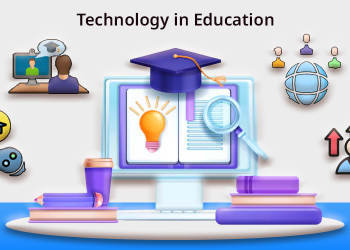
The rise of online learning in Nigeria isn’t just another tech trend – it’s a revolution that’s reshaping our entire approach to education.
As someone who’s spent the last decade working with educational technology startups in Lagos, l’ve had a front-row seat to this transformation, and let me tell you, it’s both exciting and challenging in ways that are uniquely Nigerian.
First, let’s address the elephant in the room – infrastructure. Yes, our power supply still has a mind of its own (l can’t count the number of times l’ve heard “Generator don off!” in the middle of an online class), and internet connectivity can be as unpredictable as Lagos traffic.
But here’s what’s fascinating: we’re adapting and innovating around these challenges in true Nigerian fashion.
Take my friend Olayinka’s edutech startup, for instance. They’ve developed an offline-first learning app that syncs content whenever connectivity is available. lt’s this kind of indigenous innovation that’s making online learning work for our context.
Last month, they hit 100,000 downloads across Nigeria – who would have thought this possible five years ago?
The numbers tell an compelling story. According to recent studies, over 60% of Nigerian students now have some form of access to online learning resources – a dramatic increase from just 15% in 2019.
The pandemic, despite its challenges, served as a powerful catalyst. Schools that had never considered digital options were suddenly forced to embrace them. Even my aunt, a traditional secondary school teacher for 25 years, now confidently hosts virtual classes from her living room!
But it’s not all smooth sailing. During a recent visit to a rural school in Kaduna State, l met Habiba, a bright 16-year-old who shared her frustration about not having access to the same online resources as her urban counterparts.
“l want to learn programming,” she told me, “but our village barely has electricity.” Her words highlight the digital divide that we must urgently address.
This brings me to the heart of the matter: the future of education in Nigeria isn’t about choosing between traditional and online learning – it’s about creating a hybrid model that works for our unique context. We’re seeing inspiring examples of this already:
- Community learning centers equipped with solar power and satellite internet
- Mobile education units bringing tablets and WiFi to rural areas
- WhatsApp study groups connecting students across different states
- Local content creators developing Nigeria-specific online courses
The impact goes beyond just academics. Last week, l attended a virtual coding bootcamp where students from Sokoto to Calabar collaborated on projects in real-time. The energy was electric! As one participant put it, “Distance is no longer a barrier to learning from the best.”
But let’s be realistic – challenges remain. Data costs are still prohibitive for many families, and digital literacy isn’t universal. However, l’m encouraged by recent government initiatives and private sector partnerships aimed at addressing these issues.
The recently launched Digital Nigeria program, for instance, promises to provide free coding classes to one million young Nigerians.
Looking ahead, l see three key trends shaping the future of online learning in Nigeria:
- Localization of Content: We’re moving beyond simply consuming foreign educational content to creating our own, tailored to Nigerian contexts and curriculum.
- Mobile-First lnnovation: With smartphone penetration increasing, mobile learning apps are becoming more sophisticated and accessible.
- Community-Based Learning Hubs: Blending online resources with physical spaces where learners can access technology and support.
My own experience training teachers in digital skills has shown me that success lies in building confidence gradually.
Just last month, l watched a 55-year-old English teacher, who initially feared technology, confidently host her first virtual poetry reading session. The pride in her voice when she said, “l did it!” was unforgettable.
As we navigate this digital transformation, we must ensure that technology serves as a bridge, not a barrier. The future of education in Nigeria is being written right now, one digital lesson at a time.
And while challenges persist, the enthusiasm l see – from students in Lagos to teachers in Maiduguri – gives me hope.
Yesterday, Chisom showed me his latest online science project – a virtual experiment about photosynthesis. His eyes sparkled with the same curiosity l had at his age, but his tools are light years ahead of what l had. And that’s exactly how it should be.
The future of education in Nigeria is not just online – it’s inclusive, innovative, and inherently Nigerian. And l, for one, am excited to be part of this journey. After all, as we say in tech circles, the future is already here – it’s just not evenly distributed yet. Let’s work on that distribution, shall we?