






















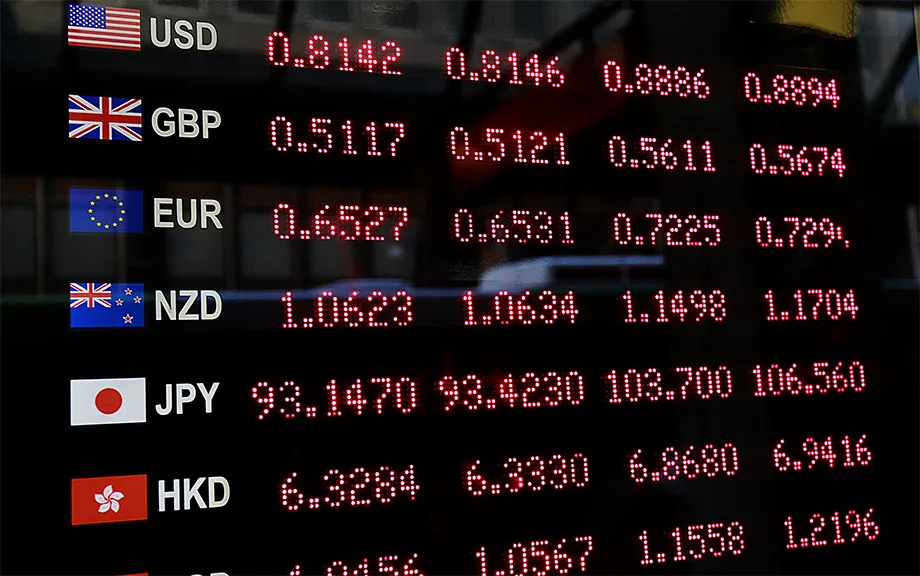
LAGOS — A massive capital realignment is reshaping Nigeria’s financial architecture. Official data finalized on Monday, June 22, 2026, reveals that total foreign exchange market turnover surged to an extraordinary $2.32 billion.
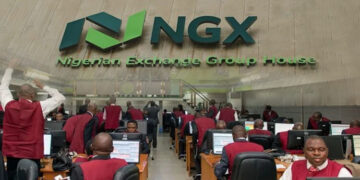
This monumental liquidity influx occurs simultaneously with a sharp, aggressive correction across the Nigerian Exchange (NGX), signaling a high-velocity rotation out of risk assets and into hard currency liquidity stacks.
The parallel market and official windows are absorbing significant transaction volumes as institutional portfolio managers, corporate treasurers, and offshore investors aggressively de-risk their positions in response to shifting global and domestic macroeconomic indicators.
The Capital Divergence: Equities Sell-Off vs. FX Influx
The sudden rush of dollar liquidity into the FX market is the direct flip side of the ongoing equities correction. Market analysts point to a multi-billion Naira profit-taking rout on the custom index, which saw major banking, consumer goods, and energy tickers lose ground.
The Mechanics of the Capital Rotation:
- The Equities Exit: Driven by fears of compressed nominal revenues in the resource sector, large-scale domestic and foreign institutional investors have trimmed their equity exposures. This mass exit triggered the sharp price correction observed across the NGX over the past several trading sessions.
- The FX Liquidity Vault: Rather than leaving the local financial system entirely, a vast portion of the liquidated Naira from these equity sales was immediately funneled into the official foreign exchange market (NAFEM). This created the massive $2.32 billion turnover spike, giving the Central Bank of Nigeria (CBN) an unprecedented liquidity cushion to clear remaining enterprise backlogs.
Macro Catalysts: The Underlying Triggers
This intense financial re-balancing is fueled by a combination of global geopolitical shifts and stringent domestic monetary policy:
[U.S.-Iran Peace Accord] ──► [Crude Settles at $65–$70] ──► [NGX Energy Tickers Correct]
                                                                        │
                                   ┌────────────────────────────────────┴────────────────────────────────────┐
                                   ▼                                                                         ▼
                     [Institutional Equity Sell-Off]                                           [Naira Liquidated & Directed to NAFEM]
                                   │                                                                         │
                                   ▼                                                                         ▼
                      [Sharp Equities Correction]                                              [FX Turnover Hits $2.32 Billion]
- The $65 Crude Reality: Following the formal signing of the initial U.S.–Iran peace accord, global crude benchmarks have stabilized tightly in the $65–$70 range. For oil-heavy equities and financial institutions heavily exposed to energy sector loans, this price drop compressed future earnings projections, prompting institutional desks to capture profits early.
- The High-Yield Fixed Income Magnet: The CBN’s defensive 26.5% Monetary Policy Rate (MPR) continues to project a massive gravitational pull on capital. With headline inflation successfully cooling to 15.93% in May, real returns on short-term debt instruments like Treasury Bills and OMO bonds have turned decisively positive. Investors are liquidating volatile equities, converting to cash, and positioning themselves to lock in risk-free, high-yielding sovereign paper.
Corporate and Treasury Implications
For corporate treasurers, digital marketing entrepreneurs, and industrial operators, this $2.32 billion liquidity surge provides an exceptionally rare operational window.
- Low-Friction Enterprise Sourcing: The massive liquidity volume in the FX market means that manufacturers and logistics firms looking to import capital components can secure dollar access with significantly reduced transaction latency.
- Infrastructure Capitalization Acceleration: Forward-looking corporate desks are moving quickly to utilize this liquid FX window to fund capital expenditure transitions. Businesses looking to protect their margins from grid tariff volatility are aggressively importing specialized hardware to transition their factories and operations to independent Solar-Hybrid energy systems, locking in predictable overhead costs for the remainder of the 2026 fiscal cycle.
The Structural Balance
The $2.32 billion FX turnover milestone demonstrates the deepening liquidity of Nigeria’s reformed financial markets. While a sharp equities correction often triggers immediate market anxiety, the seamless absorption of capital into the FX window indicates a mature, high-velocity financial ecosystem.
As long as the central bank maintains its aggressive, anti-inflationary monetary stance, this deep liquidity pool will serve as an ironclad stabilization mechanism, preventing currency volatility and building a robust baseline for non-oil market expansion.