
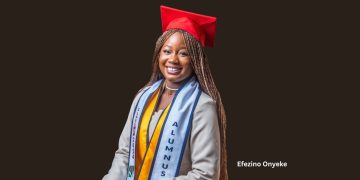
















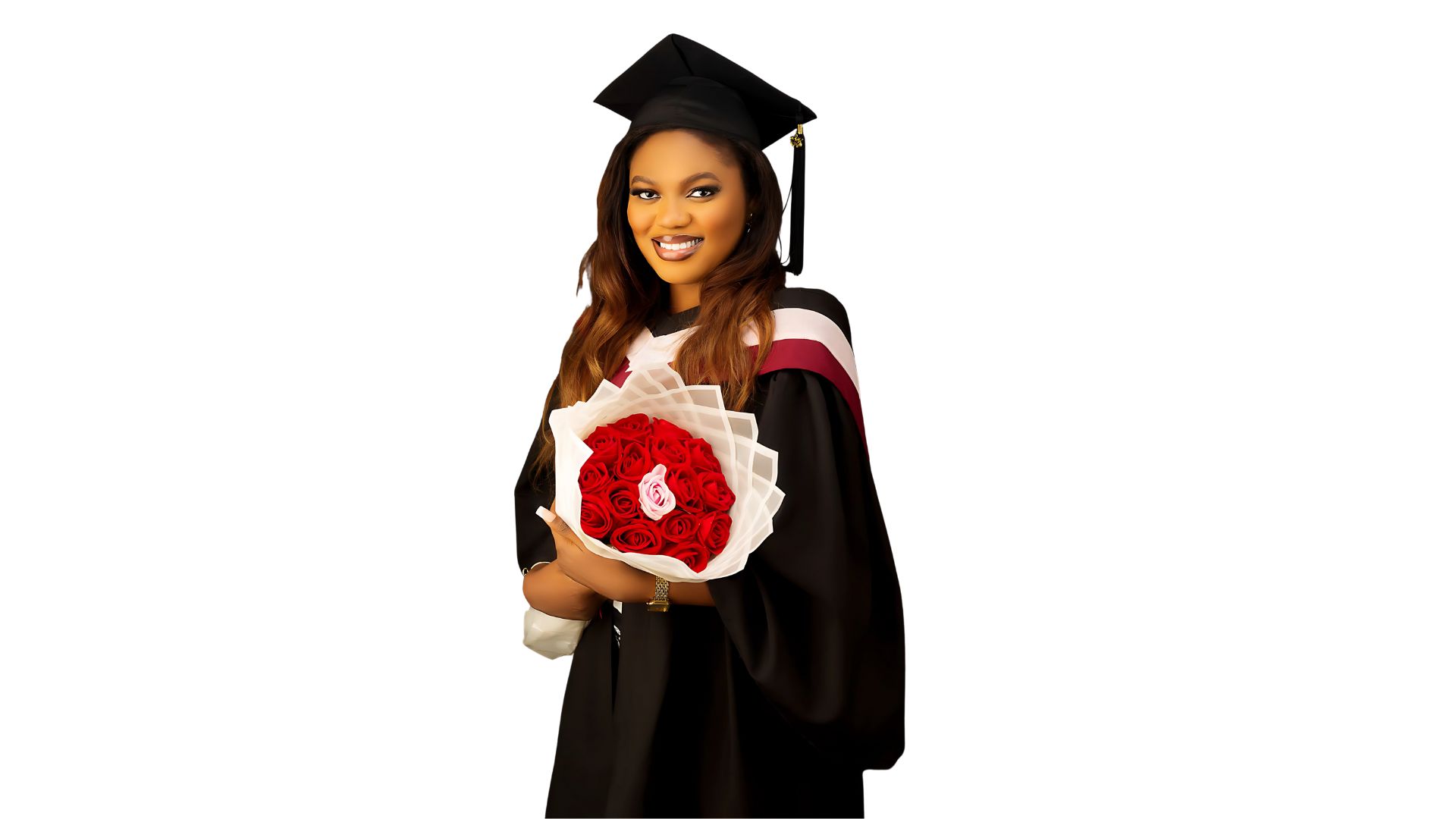
From a 5.00 CGPA in high school to a 4.97 university finish, this economics graduate didn’t just chase grades—she chased purpose.
Most valedictorians will tell you about sacrifice. About sleepless nights and missed parties, about choosing textbooks over friendships and grades over mental health.
This one chose differently. Her name is Lawal Fatimah Oyiza.
While her peers burned out chasing perfection, she discovered something revolutionary: you don’t have to destroy yourself to achieve greatness. In fact, the opposite might be true.
Four years later, the results speak for themselves. Overall Best Graduating Student at Babcock University. A 4.97 CGPA that makes other high achievers question their methods. Research spanning five countries that’s headed for international publication. Competition victories that put her on the continental stage.
And through it all? She learned to slow down, to be present, to live intentionally.
“Between studying and researching, I started choosing presence. I was present in every conversation, heard every laugh more clearly, showed up in every moment.”
This isn’t your typical valedictorian story. This is about someone who cracked the code on sustainable excellence—and what she discovered might change how you think about success entirely.
The answer, surprisingly, isn’t what you’d expect.
“This wasn’t just an academic journey,” she reflects. “It was a journey of self-discovery. I learned that who you are and who you become is completely up to you—define it, or it will be defined for you.”
The Numbers Don’t Lie (But They Don’t Tell the Whole Story)
Let’s start with the obvious: the statistics are staggering. Overall Best Graduating Student at Babcock University, Class of 2025. A 4.97 CGPA that makes other high achievers question their life choices.
Eight A1s and one B2 in her WASSCE—a performance that landed her in the 99th percentile of West African candidates and the 99.94th percentile (top 0.06%) of Nigeria’s UTME with a score of 304.
But here’s what the transcripts don’t show: the late nights wrestling with EViews and Stata, analyzing 25 years of financial data across five countries. The moments of doubt when error messages made her “question everything.” The decision to choose a research topic not because it was easy, but because it fascinated her.
The Art of Slow Living in a Fast-Paced World
Perhaps the most striking revelation isn’t her academic prowess—it’s her philosophy. In a world obsessed with hustle culture and grinding toward success, she discovered something radical: the power of slowing down.
“Between studying and researching, I started choosing presence. I began to live more intentionally. I was present in every conversation, heard every laugh more clearly, showed up in every moment, and allowed myself to simply be.”
This isn’t the typical narrative you hear from academic overachievers. Most would tell you about sacrifice, about giving up social life for books, about the relentless pursuit of the next milestone. But she chose a different path—one that prioritized mental health, genuine happiness, and authentic self-discovery alongside academic excellence.
“If you’re reading this and you feel like you’ve been rushing through life like it’s a checklist—pause, take a breath, and look around.”
Competition as Character Building
The accolades didn’t come easy. IMF Fund Challenge 2023 winner. Third place in the Africa Future Economic Leader Competition 2023. These weren’t participation trophies—they were hard-fought victories against some of the continent’s brightest minds.
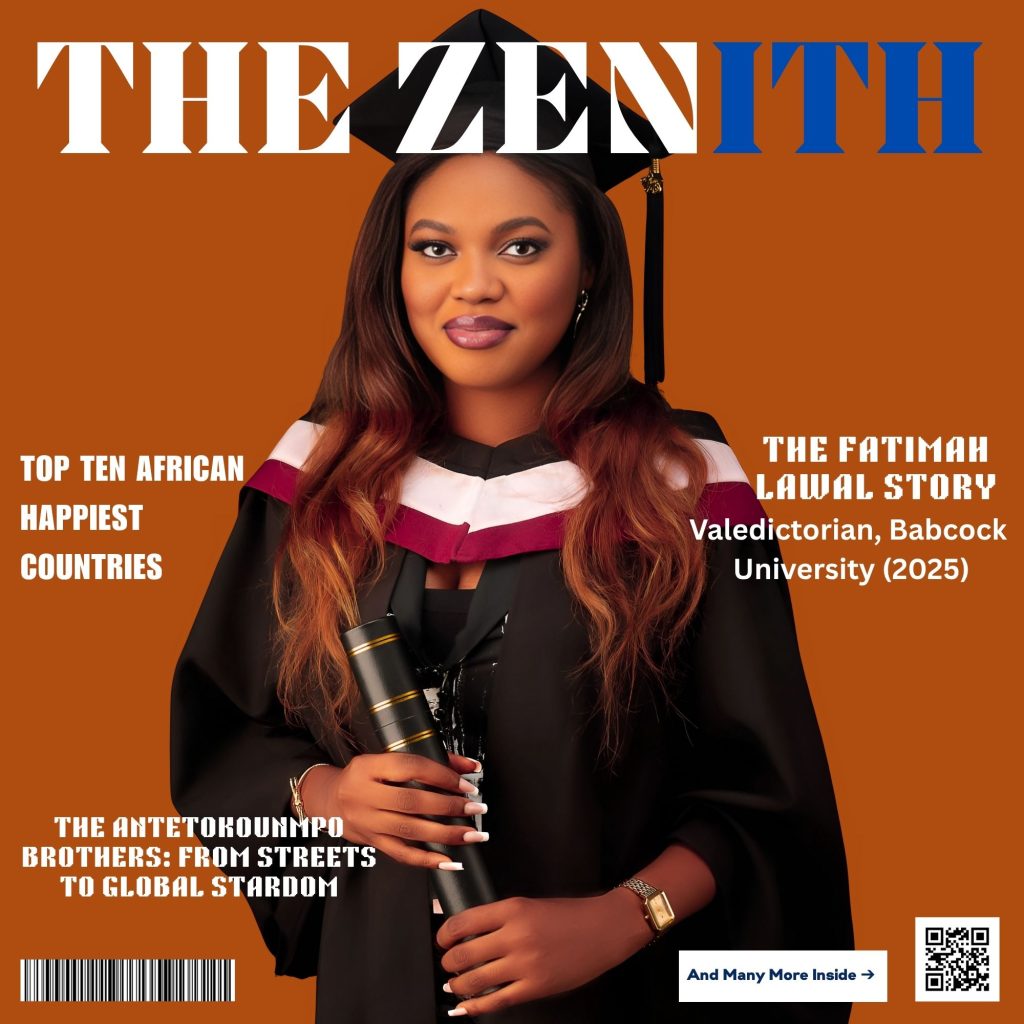
“For me, competitions were never about the prizes,” she explains. “They were about testing theories against reality, about seeing if what we learned in lecture halls could solve real-world problems.”
The girl who once served as Head Girl and President of the Home Makers’ Club in high school had evolved into a young woman who could hold her own in international economic forums. But the core remained the same: a relentless curiosity about how the world works and an unwavering belief that she could contribute to making it better.
The God Factor
In an age where academic success is often attributed to pure intellect or strategic networking, she’s refreshingly candid about her faith. Trusting in God was her guiding principle through four years of academic intensity.
“With God, the impossible is possible,” she states matter-of-factly. “I learned the value of discipline, integrity, resilience, self-confidence, and most importantly, trusting in God no matter what.”
This wasn’t prosperity gospel thinking—it was practical faith applied to real challenges. When research data wouldn’t cooperate, when competition pressure mounted, when the weight of expectations threatened to overwhelm, her faith provided both anchor and compass.
Beyond the Classroom: A Portfolio of Impact
The awards tell a story of sustained excellence:
- Overall Best Graduating Student (4.97 CGPA)
- Best Graduating Student, Veronica Adeleke School of Social Sciences
- Best Graduating Student, Department of Economics
- Recipient of the Chief Ebun O. Omoyele Award
- Recipient of the Medplus Limited Award for Best Graduating Female Student
But perhaps more impressive is what these awards represent: a young economist who didn’t just study theory but applied it, who didn’t just compete but contributed, who didn’t just achieve but inspired.
The Reality Check Moment
“It does not feel real yet,” she confesses with disarming honesty. “You know when you have been working towards a seemingly impossible goal for many years, making the sacrifices and pouring yourself into every activity needed to make it a reality, then you finally get it and you ask yourself, ‘did I really achieve it? Is this real?'”
This vulnerability—this admission that even extraordinary success comes with imposter syndrome—makes her more relatable, not less impressive. For days after the announcement at the 2025 Graduating Class Banquet, she found herself chanting like a daily affirmation: “this is real, this is real, this is real, YOU DID IT!!!”
What’s Next for a Mind Like This?
As she steps into the next phase of her life, the question isn’t what she’ll achieve—it’s what problems she’ll choose to solve. With research already being prepared for academic publication and a track record of turning curiosity into concrete results, the world is quite literally her laboratory.
“I went into Babcock with the intention to be the overall best, and I became that and so much more,” she reflects. “As I step into the next phase of my life, I will remain intentional about defining who I am going to be.”
The Bigger Picture
In a continent where youth unemployment remains a critical challenge, where economic development often feels like a distant dream, stories like this matter. They matter because they prove that excellence isn’t just possible—it’s replicable.
They matter because they show that academic achievement and personal well-being aren’t mutually exclusive. They matter because they demonstrate that faith and intellect can coexist beautifully.
This isn’t just the story of one exceptional student. It’s a masterclass in intentional living, strategic thinking, and the power of defining your own success metrics. In a world that often reduces achievement to rankings and GPAs, she chose to pursue something rarer: authentic excellence that transforms not just transcripts, but character.
The numbers are impressive, certainly. But the philosophy behind them? That’s what makes this story worth telling.
And frankly, in a world that desperately needs both brilliant economists and thoughtful leaders, we could use more minds like this one.