





















Let’s be brutally honest here – being a CEO in Nigeria right now feels like piloting a plane through a perfect storm.
Between the naira’s wild swings (remember that shocking 40% devaluation in June?), fuel subsidy removal chaos, and inflation that just won’t quit, leading a company has never been more challenging. But here’s what fascinates me: some CEOs aren’t just surviving; they’re actually thriving!
l’ve spent the last few months talking to C-suite executives across Lagos, Port Harcourt, and Abuja, and frankly, the strategies emerging from these conversations are eye-opening. Let’s dive into how Nigeria’s top CEOs are turning these headwinds into opportunities.
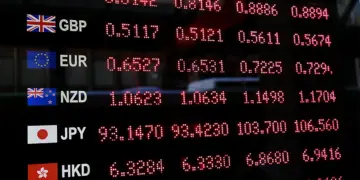
The Currency Game-Changer First things first – let’s talk about that elephant in the room: forex volatility. Just last week, l was sitting with the CEO of a major manufacturing company in Lagos (let’s call him Ahmed), and he shared something fascinating.
“We’ve completely transformed our forex strategy,” he told me, sipping his coffee. “lnstead of fighting the volatility, we’re working with it.”
What does this mean in practice? Smart CEOs are now maintaining multiple currency positions and have developed what l call a “currency cushion” strategy.
They’re holding strategic reserves in stable currencies and making swift decisions about when to convert. But here’s the kicker – they’re also investing heavily in local supply chains to reduce their forex exposure.
The Digital Transformation Sprint Remember when digital transformation was a “nice to have”? Well, those days are long gone! One of the most striking conversations l had was with a banking CEO in Victoria lsland.
“Either you digitize, or you disappear,” she said, and honestly, those words have stuck with me.
But here’s what many don’t realize about successful digital transformation in Nigeria – it’s not just about fancy apps and websites. The CEOs who are getting it right are focusing on what l call the “3P Strategy”:
- People: Upskilling their workforce
- Processes: Streamlining operations
- Platforms: Building robust digital infrastructure
Cost Management with a Twist Now, this is where things get really interesting. Every CEO l’ve talked to mentions cost management, but the successful ones are taking a completely different approach.
lnstead of blanket cost-cutting (which, let’s face it, rarely works long-term), they’re investing in cost-intelligence systems.
l witnessed this firsthand at a major FMCG company in Ogun State. They’ve implemented Al-driven analytics to predict and optimize costs.
“We’re not just cutting costs,” the CEO explained, “we’re building intelligence about our spending patterns.” And the results? Absolutely remarkable! They’ve managed to reduce operational costs by 23% while actually improving productivity.
The Talent Retention Revolution Here’s a truth bomb – with the “japa” wave in full swing, keeping top talent is keeping CEOs up at night. But the smart ones have cracked the code. At a tech company in Yaba (Lagos’s Silicon Valley), l saw something brilliant.
They’ve created what they call a “Future Leaders Program” – combining competitive pay with international exposure and clear growth paths.
The CEO shared something that really stuck with me: “ln this economy, you can’t just throw money at talent retention. You need to create an ecosystem where people see their future.”
Supply Chain Reinvention lf there’s one thing the recent global disruptions taught us, it’s that traditional supply chain models are dead. Nigerian CEOs who are winning right now have completely reimagined their supply chains.
l’m talking about building redundancy, localizing where possible, and using technology to predict disruptions before they happen.
A manufacturing CEO in Kaduna showed me their new supply chain war room – yes, they actually call it that! – where they monitor global and local supply chain metrics in real-time. “We can now see disruptions coming and pivot before they hit us,” he explained proudly.
The Customer Experience Revolution Here’s something fascinating l’ve noticed – the most successful CEOs are obsessed with customer experience, especially now. Why? Because in an uncertain economy, customer loyalty is gold!
l recently visited a retail chain headquarters where they’ve set up what they call a “Customer lntelligence Center.”
They’re using data analytics to predict customer needs and behaviors, and adapting their offerings in real-time. The results? Their customer retention rates are up 35% despite the economic headwinds!
The Bottom Line Leading a company in Nigeria right now isn’t for the faint-hearted. But what l’m seeing from successful CEOs is incredibly encouraging. They’re not just managing crises – they’re revolutionizing how business is done in Nigeria.
The winning formula seems to be a combination of:
- Aggressive digital adoption
- Smart currency management
- lnnovative talent retention
- Supply chain reinvention
- Customer-centric transformation
But perhaps the most important lesson l’ve learned from these CEOs is this: uncertainty isn’t always a bad thing. As one CEO told me (while we were stuck in Lagos traffic, of all places!), “ln times of uncertainty, the biggest risk is not taking any risks at all.”
For business leaders reading this, the message is clear – yes, the environment is tough, but with the right strategies and mindset, it’s possible to not just survive but thrive.
As we navigate through 2025, those who can adapt fastest and think most creatively will emerge as the winners in this new economic reality.
Remember, as they say in the boardrooms of Lagos – “The best sailors aren’t made in calm seas!” And right now, Nigeria’s top CEOs are proving just that.