






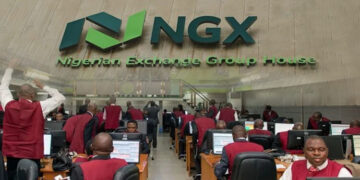
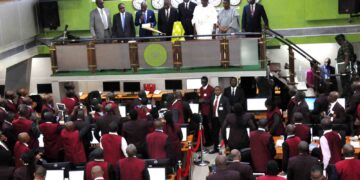











LAGOS — As the global community wakes up to a dramatically altered geopolitical landscape following the weekend’s joint U.S.-Israeli strikes on Iran, the Nigerian Exchange (NGX) finds itself at a critical crossroads.
The death of Iranian Supreme Leader Ayatollah Ali Khamenei and the subsequent “total war” declaration by Tehran have sent shockwaves through global energy and equity markets, leaving Nigerian investors to navigate a volatile mix of “oil windfalls” and “inflationary shocks.”
According to a March 1 analysis, the conflict—which has effectively shuttered the Strait of Hormuz—presents a double-edged sword for the ₦123 trillion Nigerian equities market.
The “Oil Bull” vs. The “Macro Bear”
The immediate reaction to the conflict saw Brent crude spike toward $80 per barrel, with some analysts predicting a surge to $100 if the maritime blockade persists. For the NGX, this creates a starkly divided market:
1. The Winners: Oil & Gas Blue-Chips
Stocks in the energy sector are expected to be the primary beneficiaries of the “war risk premium.”
- Seplat Energy & Oando: As indigenous producers, these firms may see significant earnings upside from higher global benchmarks.
- The “Safe Haven” Rotation: Historically, during Middle East tensions, investors rotate out of consumer goods and into energy-linked equities. With the NGX Oil & Gas sector already leading February’s 16.6% market jump, this momentum is likely to accelerate.
2. The Losers: Aviation, Manufacturing, and FMCGs
While higher oil prices help the government’s balance sheet, they exert brutal pressure on companies with high energy and logistics costs.
- Aviation Under Pressure: With regional airspaces shutting down and jet fuel prices surging, airline stocks (and linked services) are facing immediate turbulence.
- Consumer Goods (FMCGs): Companies like Nestlé Nigeria and Dangote Sugar may face a “margin squeeze” as the cost of diesel for distribution and raw material imports rises due to spiked shipping insurance rates in the Gulf.
The Currency and Capital Flow Factor
Beyond direct commodity prices, the conflict triggers a “Flight to Quality” that could impact the Naira’s recent stability:
- Capital Outflows: Global investors typically retreat to “safe havens” like U.S. Treasuries and Gold (which hit $5,360/oz on Monday) during wartime. This could lead to a temporary exit of Foreign Portfolio Investors (FPIs) from the Nigerian market, putting fresh pressure on the Naira.
- The $50 Billion Reserve Buffer: Nigeria enters this crisis with foreign reserves at a 13-year high of $50.45 billion. This “war chest” gives the Central Bank of Nigeria (CBN) significant ammunition to defend the Naira against speculative attacks triggered by the Middle East crisis.
Market Sentiment: 2026 Resilience Tested
The Nigerian market was already on a historic bull run, adding ₦24.4 trillion in value during the first two months of 2026.
- Corporate Earnings: Strong FY 2025 results—such as Dangote Cement’s ₦1.53 trillion pre-tax profit and MTN Nigeria’s ₦1.7 trillion rebound—provide a fundamental “floor” for the market.
- The “Hormuz” Bottleneck: If the Strait of Hormuz remains closed, the global supply gap (roughly 20% of seaborne oil) could pivot international buyers toward West African grades, potentially giving Nigeria’s “Cawthorne Channel” and other crude blends a premium pricing advantage.
The Bottom Line
For Nigerian stock investors, the mantra for March 2026 is “Selective Positioning.” While the headline volatility is frightening, the underlying “oil windfall” could strengthen Nigeria’s fiscal position if production volumes remain steady.
However, the risk of “imported inflation” via higher fuel and shipping costs remains the “Achilles’ heel” of the current bull market.