
























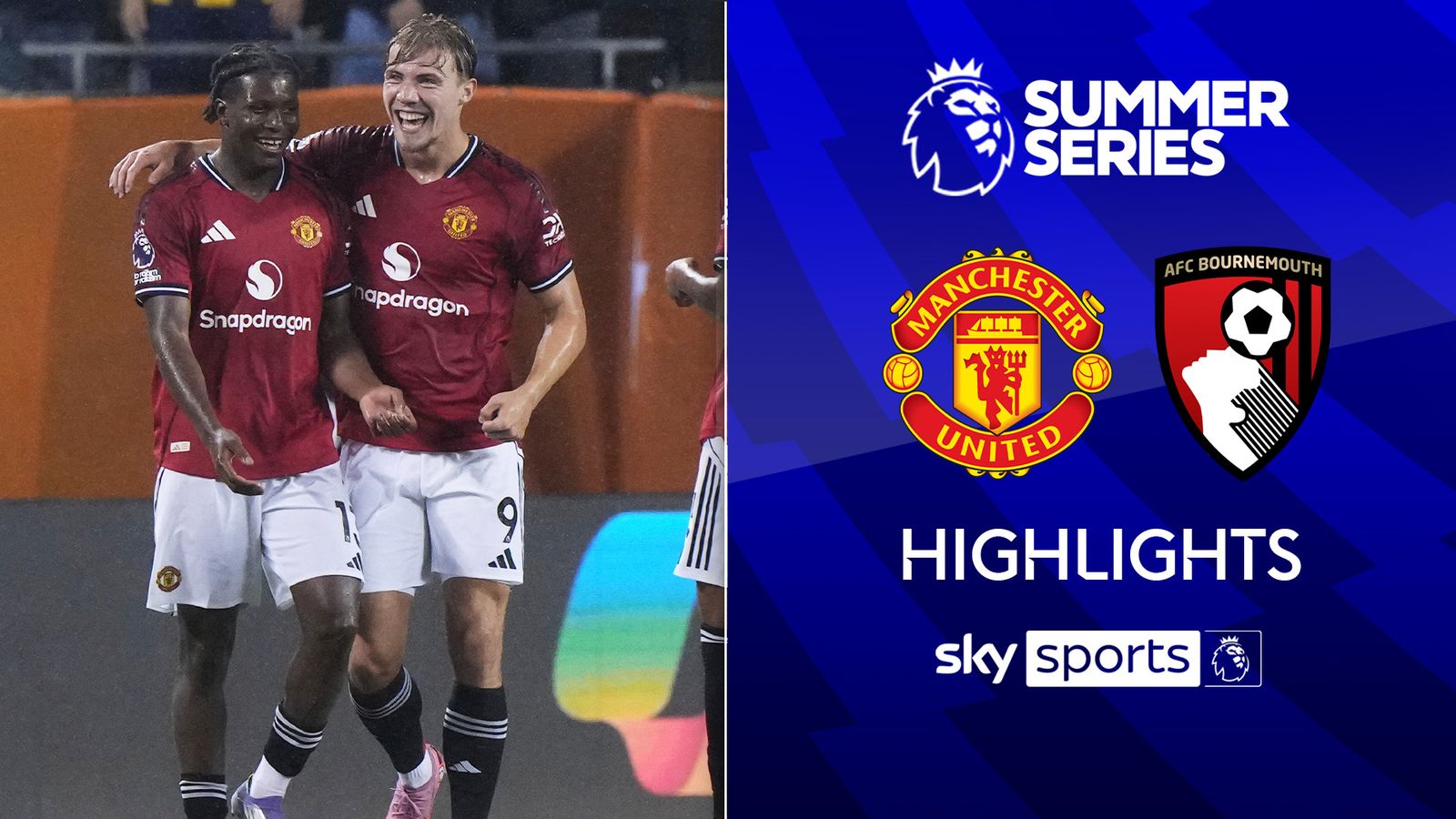
Ruben Amorim stands on the sideline in Chicago, watching his Manchester United side dismantle Bournemouth 4-1, and declares his players look like “a different team.” The Portuguese manager sees intensity, aggression, and connection—all things that were painfully absent last season.
But here’s the uncomfortable truth that no one at Old Trafford wants to acknowledge: preseason victories are about as reliable as a weather forecast in Manchester.
Let’s be brutally honest here. These aren’t victories—they’re expensive exhibitions masquerading as meaningful football.
The Illusion of Progress
Amorim’s enthusiasm is understandable, even admirable. Any manager would be relieved to see his players stringing together passes and actually looking like they want to be on the same pitch together.
But declaring transformation based on beating West Ham 2-1 and thrashing Bournemouth in torrential rain? That’s like claiming you’ve conquered Everest after climbing the stairs to your apartment.
“The same players can play a different game,” Amorim insists, and frankly, that’s exactly the problem. These are the same players who stumbled through last season like tourists lost in a foreign city. The same players who made Erik ten Hag look like a tactical amateur. The same players who have been “turning corners” for the better part of a decade.
What’s changed? The weather? The time zones? The novelty of playing in front of American audiences who still think a corner kick is called a “corner shot”?
The Mirage of New Signings
Here’s where it gets particularly interesting—and damning. United’s most impressive performances came without their marquee summer signings, Bryan Mbeumo and Matheus Cunha. As Sky Sports’ Adam Bate noted, “perhaps that is also a good sign. The same players looked a lot better.”
But is it, really? Or is it merely proof that preseason football exists in a vacuum where consequences don’t matter and defensive intensity resembles a gentle jog through the park?
The club has spent another fortune this summer, yet their best moments apparently come from the same cast of characters who delivered last season’s disappointments. It’s like remaking a terrible movie with the same script and actors but claiming the new lighting makes all the difference.
The Bournemouth Reality Check
Andoni Iraola, Bournemouth’s head coach, offered perhaps the most telling assessment: “We are very far right now from United. They are a hell of a team.” The Spaniard’s words drip with the kind of diplomatic courtesy that football managers reserve for opponents they expect to finish fifteen points above them.
But consider the context. Bournemouth, a team that finished 12th last season, looked “very far” from a United side supposedly transformed. If that doesn’t illuminate the vast chasm between preseason optimism and Premier League reality, nothing will.
The Cherries had beaten Everton 3-0 just days earlier, yet crumbled against United’s “new intensity.” What does that tell us? Either Bournemouth’s fitness levels fluctuate like stock prices, or preseason form is about as predictive as reading tea leaves.
The Data Delusion
Amorim points to improved data metrics—players are “stronger” and “faster” with “completely different” intensity levels. Data, the modern manager’s security blanket. But data in preseason is like polling before an election: interesting, occasionally illuminating, but ultimately divorced from the stakes that matter.
When Marcus Rashford was scoring hat-tricks in preseason before his disastrous campaigns, the data probably looked magnificent too. When Anthony Martial was tearing through defenses in training, the metrics likely sang his praises. Data without context is just expensive noise.
The Culture Con
Perhaps most tellingly, Amorim attributes the improvement to better connections “not just on the pitch, but off the pitch.” This is classic football management speak—the kind of vague, feel-good nonsense that sounds profound but means absolutely nothing.
What does “connecting better off the pitch” actually look like? More selfies together? Group dinners at Nando’s? Shared Netflix passwords? The club is actively trying to offload Alejandro Garnacho, Jadon Sancho, Antony, and Tyrell Malacia while shipping Marcus Rashford to Barcelona.
That’s some connection, alright—the kind that comes with a one-way ticket out of Manchester.
The Hojlund Hypothesis
Amorim credits much of United’s improvement to Rasmus Hojlund’s enhanced performances, particularly his ability to “hold the defender and connect in support.” This might be the most honest assessment in the entire piece—and the most damning indictment of the squad’s limitations.
If your entire tactical renaissance hinges on one 21-year-old striker learning to hold up the ball better, you’re not building a dynasty. You’re constructing a house of cards in a windstorm.
The Preseason Paradox
Here’s the fundamental disconnect: Amorim acknowledges that “the pressure is going to be so much different during the season,” yet bases his optimism on performances where that pressure doesn’t exist. It’s like judging a surgeon’s skill based on how well they cut vegetables.
When United face Arsenal at home in October, with 75,000 expectant fans and Sky Sports cameras capturing every misplaced pass, will these same players still look like “a different team”? Or will they revert to the hesitant, disconnected group that made last season such a grind?
The Bottom Line
Manchester United’s preseason victories aren’t signs of transformation—they’re expensive therapy sessions disguised as football matches. The real test isn’t whether they can beat Bournemouth in Chicago; it’s whether they can consistently perform when the stakes matter, the crowds are hostile, and the opposition actually wants to win.
Amorim may see a different team, but until they prove it when the points count, these victories remain what they’ve always been: beautifully crafted illusions that evaporate the moment reality intrudes.
The truth is uncomfortable but undeniable: preseason form is permanent, and permanent form is preseason. United fans have heard this song before, and they know exactly how it ends.