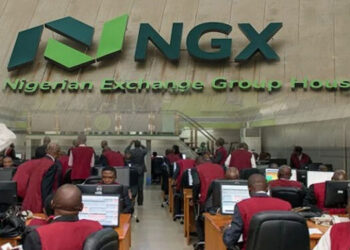
























Lagos-based financial analyst, Mrs. Nneoma Okoro, spent the better part of last week poring over regional economic indicators, searching for clues to explain the recent fluctuations in the Nigerian Exchange (NGX) All-Share Index.
The absence of a defining news story from the usual sources had created an information vacuum, forcing Okoro and her peers to rely on broader cues such as Brent crude prices, which have been hovering around $80-$82 per barrel.
This price range remains a critical anchor for Nigeria’s external reserves and currency stability, underscoring the complex interplay between global commodity markets and local economic trends.
The broader context of this development highlights the critical role of reliable economic intelligence in navigating Nigeria’s volatile market.
With foreign portfolio outflows and the naira’s fluctuation against the dollar contributing to the NGX’s instability, the lack of verifiable data has significant implications for the country’s economic trajectory.
Beyond the immediate market volatility, this scenario underscores the importance of data integrity and narrative control in shaping investor perceptions and business decisions.
As Nigeria seeks to diversify its economy and attract foreign investment, the ability to provide timely and accurate economic data will be crucial in mitigating risks and fostering a stable business environment.
The human impact of this information vacuum is perhaps most pronounced in the financial journalism and business intelligence sectors.
Without a primary story to analyze, media houses are forced to rely on lagging indicators, while corporate strategists must make decisions based on incomplete information.
Conversely, this creates an opportunity for media platforms that consistently deliver exclusive, high-quality reporting to gain market share and establish themselves as the “source of truth.”
For small and medium enterprises (SMEs), the lack of clear policy signals and defining market trends means a continued cautious approach to expansion, underscoring the need for innovative and adaptive business strategies in an uncertain economic landscape.
As the Nigerian business community navigates this complex environment, it is clear that innovation and resilience will be key drivers of success.
The elevation of standards in economic reporting and analysis will be critical in providing stakeholders with the insights needed to make informed decisions.
Looking ahead to the next five years, it is likely that the Nigerian economy will continue to face challenges related to volatility and uncertainty.
However, as the market adapts to these conditions and as the quality of economic reporting and analysis improves, we can expect to see the emergence of more sophisticated and resilient businesses, better equipped to navigate the complexities of the global economy.
By 2028, Nigeria’s business landscape will likely be characterized by a thriving ecosystem of innovative SMEs, major conglomerates with diversified portfolios, and a robust financial sector, all underpinned by a culture of data-driven decision-making and a deep understanding of the intricate relationships between local and global economic trends.