















World conquest is an alluring dream, but few who dream it ever wake to its reality.
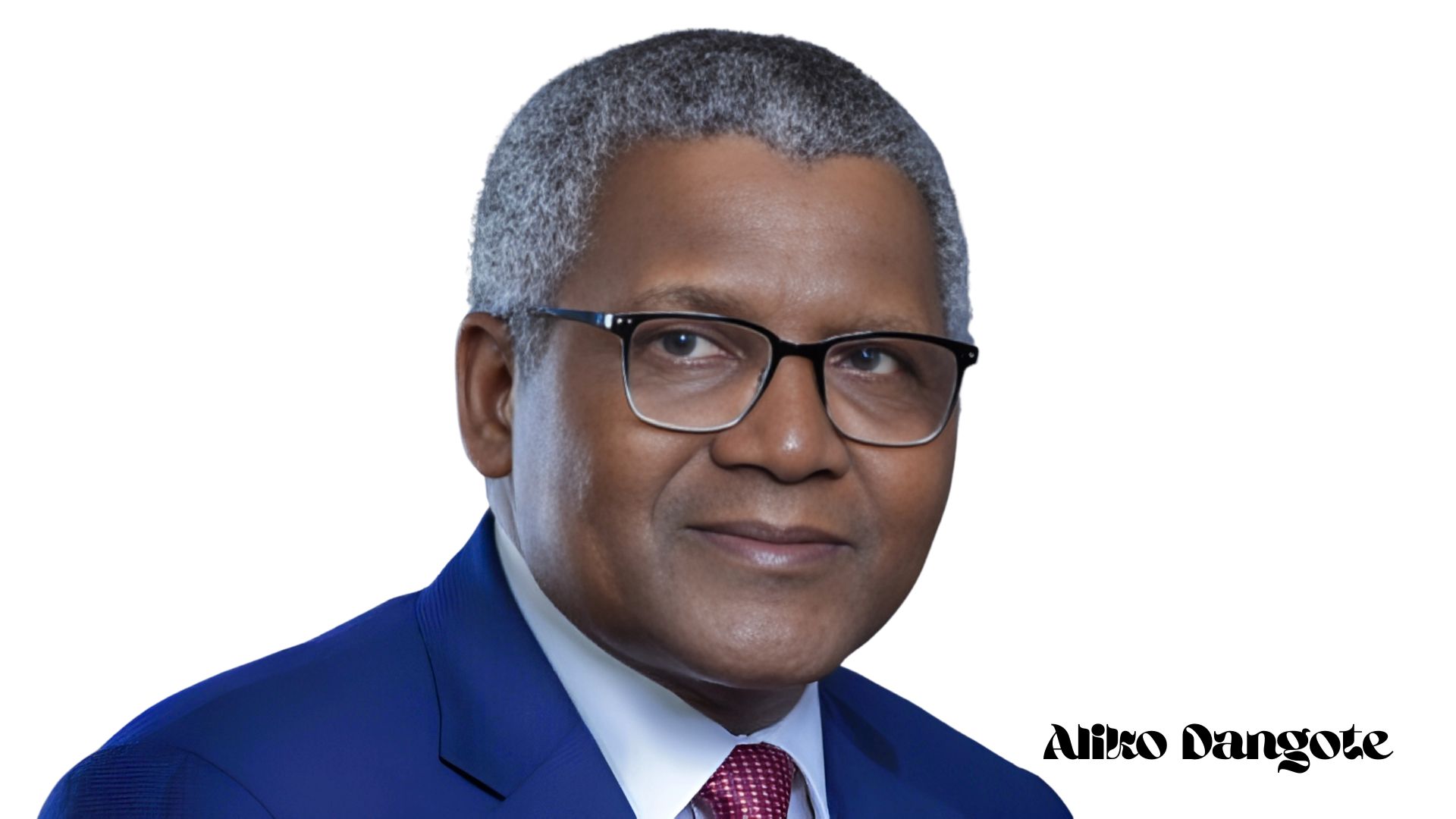
As a boy, even I dreamed sometimes of being a Dangote. Every boy did. Every man do.
At 650,000 barrels per day, Aliko Dangote’s $20 billion monument to industrial ambition sits on the Lagos coastline, a testament to what one man can build when money meets obsession.
“I didn’t know what we were building was a monster,” Dangote confessed during a visit to New York, his voice carrying the weight of a man who’d stared into the abyss of his own making.
The pressure, he said, came from different directions—critics, competitors, even his own government. “People confusing us, disturbing us every day with different media stories that it will never work.”
But it did work. Oh, how spectacularly it worked. The refinery now hums like a sleeping giant. No accolades can be too much for a man who has built so much with little.
In truth, the days when an African can be the richest man in the world is way beyond us, but being the richest man in Africa is a feat worth celebrating for Nigerians, daily. O yes, on a daily basis.
The Bloomberg Billionaires Index now pegs Dangote’s net worth at $27.8 billion, more than doubling from $13 billion just a year ago. The refinery alone—now the world’s largest single-train facility—transformed him from merely Africa’s richest man into something approaching an industrial emperor.
But here’s the thing about monuments—they’re often built by men who simply can’t quite figure out how to build strong and loving relationships with wives or children. And great houses have been known to fall from the mistakes of weak heirs.
Yet for all his success in building the biggest, the fastest, the most audacious projects on the continent, Dangote’s personal life reads like a cautionary tale about the price of ambition.
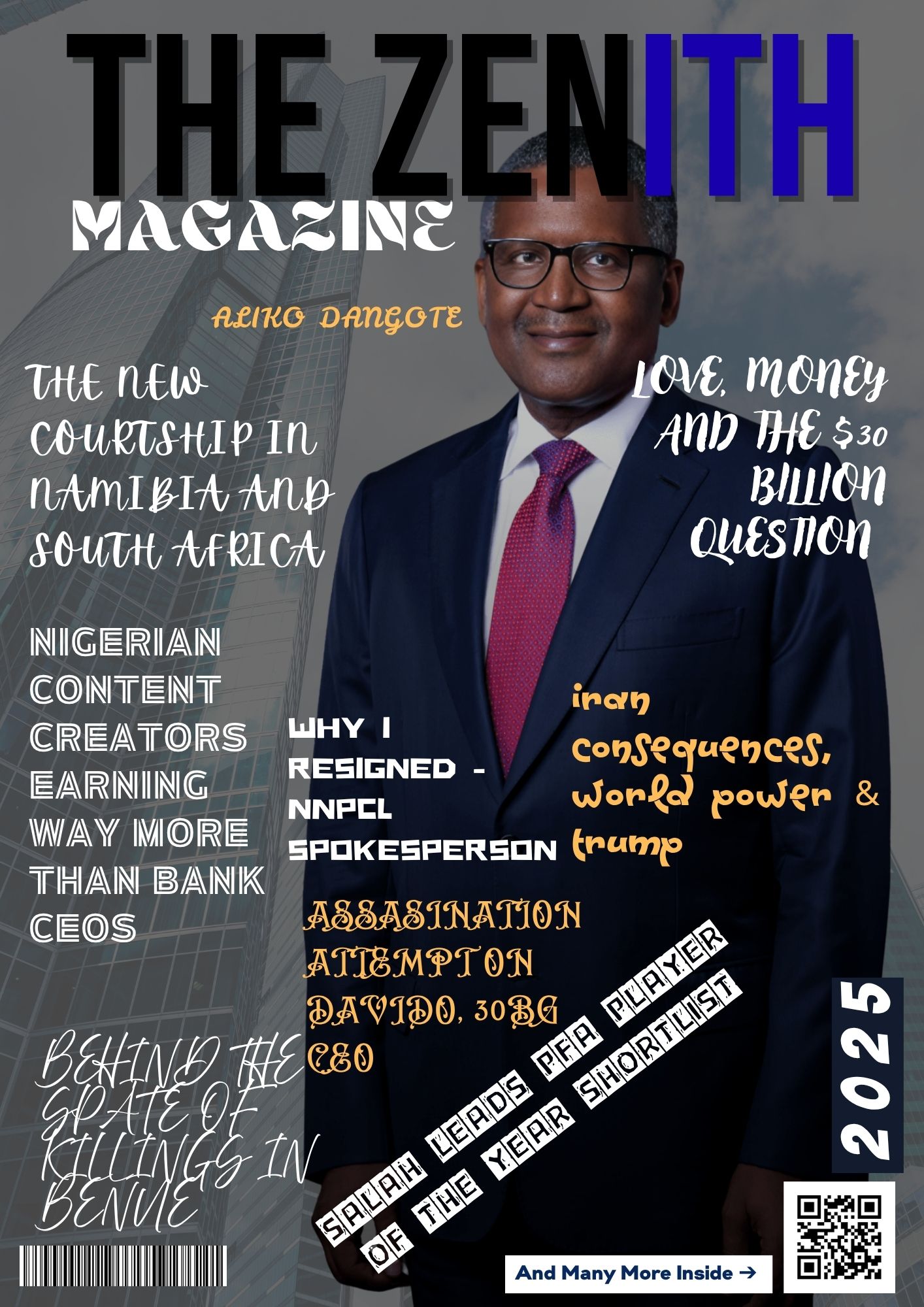
The Heart vs. The Empire
Two marriages. Two divorces. Four children scattered across a life lived in boardrooms and construction sites. At 67, Dangote has mastered the art of moving markets, but seemingly struggles with the simpler challenge of sustaining love.
His wives, according to those who know them, “hated publicity”—a curious irony for a man whose every move makes headlines across Africa.
His first marriage, to Zainab, was arranged by his parents when he was just 20—a traditional union that produced daughters Maria and Halima before dissolving into the anonymity that wealthy men often purchase for their private pain.
His second wife, Mariya Muhammad Rufai, the daughter of a Bauchi State commissioner, gave him daughter Fatima before their 2017 divorce. The pattern emerges: brilliant businessman, struggling husband.
But it’s the Autumn Spikes affair that perhaps best illustrates the peculiar loneliness of extreme wealth. Here was a man worth nearly $30 billion, reduced to fighting a $5 million extortion demand from a former girlfriend who posted intimate photos on Instagram.
The court documents, filed under the pseudonym “John Doe” (with the telling alias “AD”), paint a picture of a mogul who can move governments, but couldn’t move one woman to discretion.
“Your client broke off the relationship as soon as one of his other conquests broke her silence,” Spikes’ lawyer wrote, the language cutting deeper than any business rival ever could.
The “other conquest” referenced was likely Bea Lewis, another former mistress whose public revelations had apparently spooked Africa’s most powerful industrialist. And that’s the sort of things you attract when you are damn too big.
The Continental Crusader
“Africa is Africa. It’s not about Nigeria alone.” When Dangote speaks these words, there’s steel in his voice—the conviction of a man who’s spent decades proving that African entrepreneurship can compete with anything the world throws at it.
His latest courtship isn’t romantic; it’s continental. Namibia and South Africa have caught his eye, not for their beaches, but for their potential.
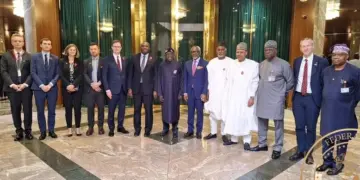
During his recent meeting with Namibian President Netumbo Nandi-Ndaitwah in Windhoek, Dangote painted his vision in characteristically bold strokes. “If we sit back, there is no entrepreneur—whether from Japan, the U.S., or elsewhere—who can come and build our continent for us.”
The message was clear: African problems require African solutions, funded by African capital.
His recent $620 million investment in South Africa represents more than just portfolio diversification.
“It’s not about Nigeria; it’s about Africa. We must show that it can be done, and done by us.”
The words carry the weight of generational ambition—this is a man building not just for profit, but for posterity.
President Nandi-Ndaitwah’s response revealed why Dangote’s charm offensive works so well with African leaders. “We are too few to be poor, considering the resources we have,” she said, echoing themes Dangote has championed for decades.
“African entrepreneurs like you give hope to the young ones that it is possible.”
The Monopolist’s Dilemma
Critics call him a “politically connected monopolist,” and frankly, they have a point. Before Dangote entered the cement business, Nigeria imported the stuff—the literal building blocks of development.
To them, he is a symbol of everything they’ll never have, so they can loathe him for the safety of their small lives.
Now the country exports cement, and Dangote Cement dominates markets from Senegal to South Africa. His sugar operations, flour mills, and salt production follow similar patterns: identify essential commodities, build massive capacity, dominate markets.
The refinery represents the apotheosis of this strategy. Nigeria had been importing refined petroleum products for decades despite being Africa’s largest oil producer—an absurdity that Dangote decided to fix with characteristic audacity.
The $20 billion project took 11 years to complete, “three-and-a-half times as long and more than twice as much as initially planned.” But it worked.
“We now have oil and gas. We’ve just finished building the largest refinery ever built, not just in Africa, but globally,”
Dangote announced with justifiable pride. “We produce one million tonnes of polypropylene, carbon black feedstock, LPG, sulphate chips, and a fertilizer capacity of over three million tonnes—the second largest in the world.”
The numbers are staggering, but they mask a deeper truth: Dangote has essentially weaponized industrial capacity. His 80% dollar-denominated business model shields him from Nigeria’s currency volatility, while his massive scale creates insurmountable barriers for competitors.
Next year, he claims, the Dangote Group will be Nigeria’s biggest supplier of dollars—a position that grants him influence that transcends mere wealth. If he forbades the tides, the wave could cease.
Love, Money, and the Price of Power
But what does it cost a man to build an empire? The Autumn Spikes affair offers uncomfortable insights. Here was a relationship that spanned “nearly the entire past decade since she was pretty young,” according to court documents.
When it ended—apparently triggered by another ex-mistress going public—Dangote sought a non-disclosure agreement. Spikes wanted $5 million for her silence.
The resulting legal battle revealed a man simultaneously powerful and vulnerable. His lawyers described him as someone whose “business acumen has made him a target for coercion,” a phrase that captures the peculiar isolation of extreme wealth.
Can a billionaire ever be certain whether he’s loved for himself or his bank account?
The court documents detail a pattern of “generosity” toward Spikes, including funding her “start-up business” with the understanding that it would remain confidential. When the relationship soured, Dangote demanded a refund—billionaire behavior that somehow manages to be both petty and tragic.
“John Doe’s generosity toward Autumn Spikes, if any, has been breached,” his lawyers wrote, the clinical language barely concealing the human pain beneath. This is a man who can fund nations but couldn’t buy loyalty from a woman he’d supported for nearly a decade.
The Namibian Gambit
The timing of Dangote’s African expansion offensive isn’t coincidental. With his refinery finally operational and his net worth soaring, he’s positioning himself as the continent’s industrial champion at precisely the moment when global supply chains are reshuffling.
His interest in Namibia’s green hydrogen potential and South Africa’s manufacturing base reflects a broader strategy that’s part capitalism, part pan-Africanism, and part legacy building.
President Nandi-Ndaitwah’s invitation to consider Namibia as “a home away from home” carried deeper meaning than diplomatic courtesy. African leaders recognize that Dangote represents something unprecedented: indigenous capital operating at global scale.
His success validates their development models while his investments provide the infrastructure their economies desperately need.
But here’s the question that haunts every conversation about Dangote: Is this about greed, patriotism, or something else entirely? His critics see a monopolist gaming political connections for commercial advantage.
His supporters see a visionary proving that African entrepreneurs can compete globally. The truth, as usual, is more complex.
The Loneliness of Lions
“I didn’t know that the mafia in oil is stronger than the mafia in drugs,” Dangote revealed, his usual confidence cracking slightly. “I wouldn’t wish this experience on my worst enemy.”
The comment, made during his New York visit, offered a rare glimpse behind the industrialist’s facade. Building the world’s largest refinery had required battling entrenched interests who preferred Nigeria’s dependence on imported fuel.
The phrase “I didn’t know what we were building was a monster” suggests something deeper than business frustration. There’s an element of Icarus in Dangote’s story—a man whose ambitions may have carried him closer to the sun than he’d intended.
His refinery works, his wealth has doubled, and his continental influence grows daily. But the personal cost keeps mounting.
His plan to deploy 4,000 CNG-powered trucks for nationwide fuel distribution has “rattled the downstream petroleum industry,” according to industry observers. Traditional fuel marketers worry about being displaced—a legitimate concern given Dangote’s track record of dominating every sector he enters.
The Nigerian National Petroleum Company’s initial exclusive purchasing agreement with the refinery reflects the complex relationship between Dangote and the government.
He needs political support to operate; they need his industrial capacity to function. It’s symbiosis disguised as business, and both sides understand the game.
The Empire Strikes Back
Eighty percent of Dangote’s business is dollar-denominated, a strategic decision that insulates him from Nigeria’s currency volatility while positioning him as a critical source of foreign exchange.
“Our strategy is whatever we do, we generate as much foreign exchange as possible,” he explains. “That will shield us from the issues of currency devaluation in Africa.”
It’s brilliant positioning, but it also highlights the fundamental challenge facing African economies: their most successful entrepreneurs often have to structure their businesses to minimize exposure to their home countries’ economic instability.
Dangote loves Nigeria enough to build there, but trusts the dollar more than the naira.
His expansion into Namibia and South Africa follows this pattern. These investments spread risk while extending influence, creating industrial networks that transcend national boundaries.
If successful, Dangote won’t just be Africa’s richest man—he’ll be its most important industrialist, the person who proved that continental-scale manufacturing was possible.
The $30 Billion Question
So what drives Aliko Dangote? Love of country? Love of money? Love of power? The answer, inevitably, is all three, wrapped in the complex psychology of a man who’s spent decades proving that African entrepreneurship can compete globally.
His failed marriages suggest a man more comfortable with industrial processes than human emotions. His legal battles with former girlfriends reveal someone who understands markets better than relationships.
His continental expansion reflects genuine pan-African vision constrained by hard-nosed commercial calculation.
The refinery stands as his definitive statement: a $20 billion declaration that Nigeria doesn’t need to import what it can produce. Whether that makes him a patriot or a monopolist depends largely on your perspective.
What’s undeniable is that he’s fundamentally altered Nigeria’s industrial landscape and positioned himself as Africa’s most influential private citizen.
President Nandi-Ndaitwah’s observation that “Namibia is ready for this kind of partnership” reflects broader African recognition that Dangote represents something unprecedented: indigenous capital operating at global scale.
His success validates arguments for economic sovereignty while his methods raise questions about concentration of power.
The truth about Dangote exists in the contradictions. He’s simultaneously Africa’s greatest industrial success story and a cautionary tale about the personal costs of extreme ambition.
He builds refineries that employ thousands while struggling to maintain relationships with individuals. He champions African entrepreneurship while structuring his businesses to minimize African risk.
At 67, with a $27.8 billion fortune and continental expansion plans, Dangote has achieved everything he set out to accomplish—except, perhaps, the kind of personal happiness that can’t be quantified on balance sheets.
His empire spans industries and countries, but his heart remains a more difficult territory to master.
The refinery hums on, processing 650,000 barrels daily, a monument to what one man can build when vision meets capital. Whether it represents love of country, love of money, or simply the relentless logic of capitalism may be the wrong question.
Perhaps it’s enough that it exists—Africa’s largest refinery, built by African capital, proving that the impossible remains merely difficult for those stubborn enough to persist.
In the end, that may be Aliko Dangote’s greatest achievement: not just building an empire, but demonstrating that African entrepreneurs can dream as big as anyone else on earth, even if the personal costs sometimes exceed the commercial gains.
This article is based on public records, court documents, and interviews conducted in Lagos, Windhoek, and New York.