











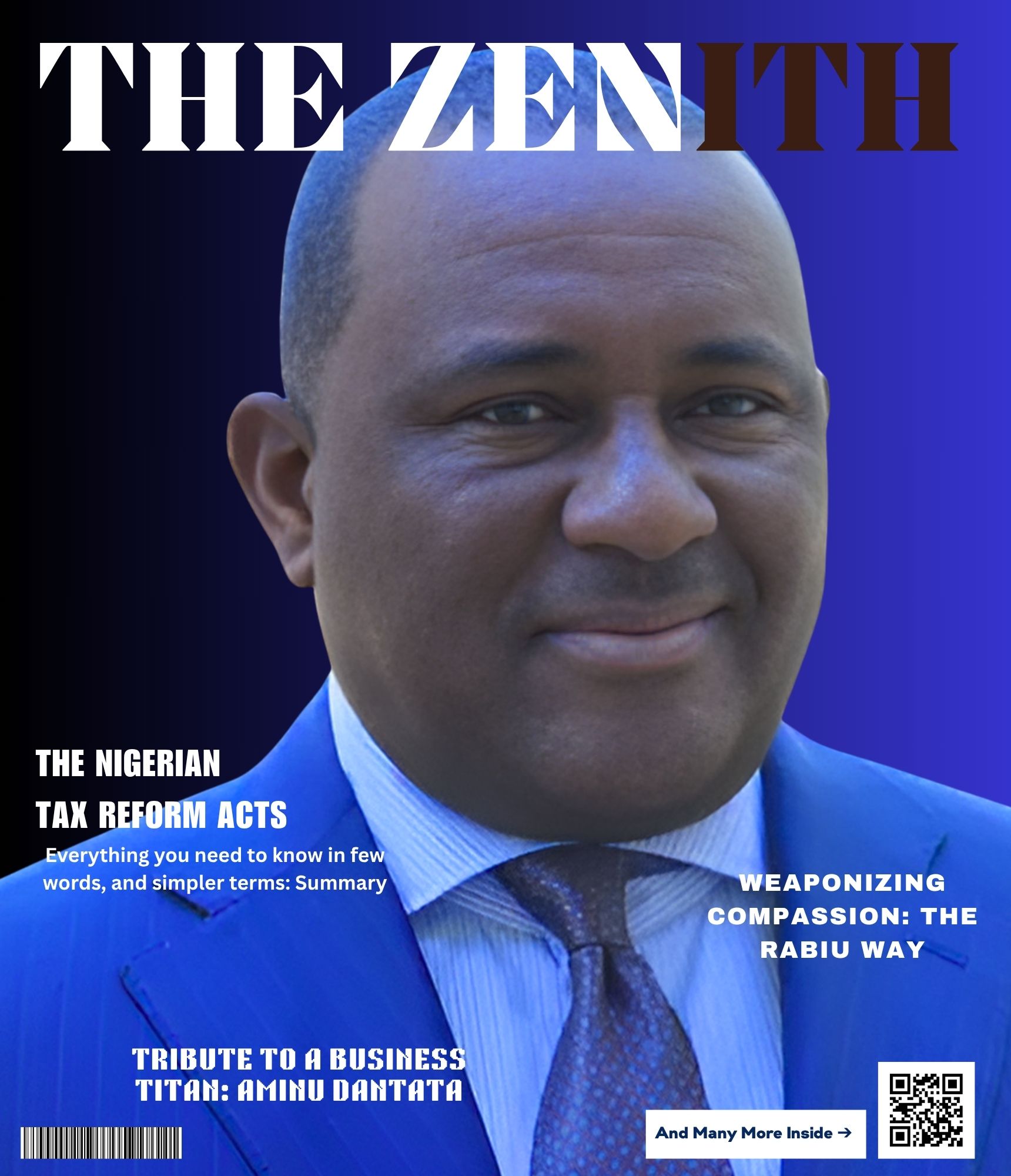
In a world where billionaires collect yachts like trading cards, one Nigerian mogul chose to collect something far more dangerous: the loyalty of 250 million people.
When the president complained that rice prices had hit N120,000 per 50kg bag—highway robbery disguised as market forces—he highlighted that hoarders were bleeding the nation dry.
Most billionaires would have offered sympathy, maybe pay lip service. Abdulsamad Rabiu? He declared war.
Within weeks, Nigeria’s rice cartel found themselves staring down the barrel of economic disruption. BUA Group’s imported rice flooded the market like a strategic monsoon, driving prices to nearly half their peak.
No fanfare. No press conferences. Just the quiet devastation that comes when industrial muscle acts with moral clarity.
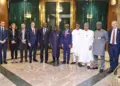
“A lot of those hoarders are actually crying now and losing money,” Rabiu told reporters after his Presidential Villa meeting, his voice carrying the satisfaction of a man who’d just defanged a snake. “I appreciate that, yes.“
Many ‘d kneel to a pig if their daddy did, captures the inherited servility that plagues many business dynasties. Rabiu stands.
The Making of an Economic Insurgent
Born in Kano in 1960, he watched his father, Khalifah Isyaku Rabiu, build an industrial empire only to see it threatened by political winds.
When General Muhammadu Buhari’s administration detained his father over alleged rice import duties, young Rabiu learned a lesson that would define his approach to business: in Nigeria, you either control the game or the game controls you.
He chose control.
At 28, Rabiu founded BUA International Limited with the audacity that only comes from understanding both privilege and precariousness.
Starting with commodity trading—rice, edible oil, flour, iron and steel—he built what would become a $2.5 billion revenue machine. But calling it just business misses the point entirely.
The Cement Titan
By 2009, Rabiu had acquired a controlling stake in a publicly listed cement company in Northern Nigeria. But here’s where the story gets interesting: he didn’t just buy cement plants, he broke monopolies.
The $900 million cement facility in Edo State, completed in 2015, wasn’t just about market share—it was about market liberation.
When public infrastructure projects needed cement, Rabiu froze prices. Not because contracts demanded it, but because national development demanded it.
Rabiu chose to be the flame that burns away inefficiency, not the one that consumes opportunity.
Alongside Aliko Dangote, he pledged N20 billion yearly to revive the Cement Technology Institute. Because in Rabiu’s world, tomorrow’s builders shouldn’t just carry blocks—they should carry skill, pride, and vision.
The Sugar Wars
In 2008, BUA commissioned sub-Saharan Africa’s second-largest sugar refinery, breaking an eight-year monopoly that had held Nigeria’s sweet tooth hostage.
The move was classic Rabiu: identify a chokepoint, overwhelm it with superior capacity, then stabilize prices for consumers.
The $3.5 Billion Gamble
The BUA Refinery and Petrochemicals facility in Akwa Ibom State represents Rabiu’s boldest bet yet. At $3.5 billion, it’s not just an investment—it’s a declaration of independence. When operational, it will refine 200,000 barrels of crude oil daily, producing Euro-V fuels and polypropylene.
But here’s the kicker: while other billionaires chase returns, Rabiu chases national security. The refinery isn’t just about profit margins—it’s about ensuring Nigeria never again finds itself begging for refined petroleum products.
Rabiu inverted the formula of capitalism: fund the rise of your own nation, and the nation honors your vision with prosperity.
The Philosophy of Humanized Capitalism
Don’t mistake Rabiu for a traditional philanthropist. The BUA Foundation’s 7,000-square-meter pediatric ward at Aminu Kano Teaching Hospital and the Centre for Islamic Studies at Bayero University Kano aren’t charity—they’re strategic compassion.
President Tinubu’s phrase fits him like a bespoke suit. In an era where capital flight is the norm, Rabiu’s capital fights—for local production, stable prices, and national dignity. A statement befitting of one of his 4 wise men.
The Numbers Don’t Lie
Forbes pegged Rabiu’s wealth at $6.7 billion in 2022, making him Africa’s fifth-richest man. By 2023, he’d climbed to fourth. But wealth rankings miss the point. Rabiu’s true measure isn’t net worth—it’s net impact.
Nigeria consumes seven million tonnes of rice annually. Local production leaves a 1.8 million-tonne gap that middlemen exploit mercilessly, driving 40-60% mark-ups. Rabiu’s intervention didn’t just fill the gap—it obliterated the exploitation model.
The Succession Question
With four children—Khadija Cookie, Isyaku Khalifa, Junaid, and Rania—Rabiu faces the challenge that has toppled more business empires than economic downturns: succession.
Will the next generation carry forward his philosophy of humanized capitalism, or will they retreat into traditional billionaire behavior?
“What new rung will the next generation climb?” Indeed.

The London Telegraph Moment
When Rabiu published his opinion piece in The Telegraph, urging Britain and Western allies to deepen partnerships with Nigeria, he wasn’t just soliciting investment—he was issuing an invitation to witness transformation.
“Fortunately, Nigeria has now decisively turned a corner, embracing market economics under a liberalising government,” he wrote. The subtext was clear: Nigeria is open for business, but only with partners who understand that true business builds nations, not just portfolios.
Beyond the Billions
The rice intervention reveals Rabiu’s master strategy: use overwhelming industrial capacity to destroy predatory pricing, while building consumer loyalty that transcends market cycles. It’s not just about rice—it’s about trust.
Call him Nigeria’s second-richest man, and you’re technically correct, but spiritually wrong. Rabiu represents something rarer than wealth: the convergence of profit and purpose, where business success amplifies national progress rather than extracting from it.
In a continent where too many billionaires export their capital while importing their luxuries, Rabiu invests at home, and exports excellence. His $3.5 billion refinery will help Nigeria become a net petroleum exporter by 2030.
His rice strategy protects 250 million Nigerians from speculation. His cement operations enable infrastructure development.
Calculations
In an era when billionaires are increasingly seen as problems to be solved rather than successes to be celebrated, Abdulsamad Rabiu offers a different model: the mogul as national asset, the industrialist as economic patriot, the billionaire as public servant.
His father, Khalifah Isyaku Rabiu, was one of Nigeria’s foremost industrialists in the 1970s and 1980s. The son has become something more: an economic insurgent who wages war on inefficiency, speculation, and foreign dependence.
Rice may seem like a humble battlefield for a billionaire’s legacy. But in Nigeria, rice is ritual, comfort, survival. By conquering that market, Rabiu didn’t just make money—he made believers.
Rabiu has learned something different: that true power comes not from hoarding resources, but from deploying them strategically for both profit and purpose.
The rice revolution continues. The insurgent has more battles to fight. And Nigeria? Nigeria now has another billionaire who fights for home.
With decades of dominance, Abdulsamad Rabiu shows no signs of slowing down. His next target? Turning Nigeria into a net petroleum exporter, while maintaining his stranglehold on fair pricing. For hoarders and speculators everywhere, the message is clear: the growth insurgent is just getting started.