



















No Result
View All Result
The Zenith Magazine
  • Academics
    expensive secondary schools in nigeria

    The Price of Excellence: Top 10 Most Expensive Secondary Schools in Nigeria (2026 Edition)

    asuu strike

    ASUU Strike UPDATE: Latest on ASUU’s Salary Standoff Threatens Nigeria University System

    Efezino Onyeke

    From Childhood Dreams to Courtroom Reality: The Efezino Onyeke Story

    Isioma Nwosu LASU BEST graduating student and valedictorian

    LASU Valedictorian: When A Bitter Pill Becomes Your Breakthrough

  • Business
    Eternal-Plc-stand-scaled

    Eterna PLC Breaks Records: ₦261 Billion in Fuel Sales as 2025 Profit Reaches ₦7.2 Billion

    NGX

    Q1 Champions: The 10 Best-Performing Nigerian Stocks of 2026

    Nigerian-stocks

    Easter Surge: Best Performing Nigerian Stocks for Easter Week 2026

    guinness

    Market Momentum: Top 10 Best-Performing Nigerian Stocks for the Week Ended March 13, 2026

    Nigeria-Ports-Authority

    The Engines of Trade: Top 10 Ports Handling Nigeria’s Imports and Exports (Q4 2025)

    nigerian oil and gas sector

    Breaking the Glass Ceiling: 10 Most Powerful Women in Nigeria’s Oil and Gas Sector (2026)

  • Banking
    NCR-Nigeria-1

    Market Momentum: Top 10 Nigerian Stocks with the Highest Year-to-Date Returns in 2026

    NGX

    The Wealth Shift: Nigerian Stocks Evolve into a Primary National Savings Component

    zenith bank

    Zenith Bank Shatters Records: FY2025 Profit Hits ₦1.26 Trillion with Massive ₦8.75 Dividend Proposal

  • Tech
    • All
    • Biotech
    • Edutech
    • Fintech
    eTranzact-Plc

    Resilience in Returns: eTranzact Proposes ₦1.15 Billion Final Dividend Despite Profit Contraction

    Nimet

    The Climate Blueprint: What the 2026 NiMet Weather Report Means for You and Your Business

    transgrid energy

    The Lagos Power Pact: Transgrid Enerco and Decentralised Energy Limited Partner to Stabilize Grid Reliability

  • Telecom
    Direct Restitution: NCC Mandates Automatic Subscriber Compensation Starting April 2026

    Direct Restitution: NCC Mandates Automatic Subscriber Compensation Starting April 2026

    MTN-Group

    MTN Group’s 2025 Surge: Nigeria and Ghana Drive Double-Digit Growth Amid Currency Headwinds

    mtn nigeria - ngx

    The Great Recovery: MTN Nigeria Swings to ₦1.11 Trillion Profit, Restores Dividends in FY 2025

    nollywood

    Box Office Strongholds: The 10 States That Powered Nollywood’s ₦15.6 Billion Year

  • International
    opec on isreal-us-iran war

    Stabilizing the Surge: OPEC+ Announces 206,000 bpd Output Increase for May

    Nigerias-box-office

    Silver Screen Surge: Nigerian Box Office Hits 6-Year High in Q1 2026 Admission Rates

    Naira weakens

    The Dual Shock: Naira Weakens as Bonny Light Crude Hits $120 Amid Petrol Import Pressure

    bollore family

    The Invisible Giants: Meet the Bolloré Family, the Dynasty Controlling Canal+, MultiChoice, and Universal Music Group

The Zenith Magazine
  • Academics
    expensive secondary schools in nigeria

    The Price of Excellence: Top 10 Most Expensive Secondary Schools in Nigeria (2026 Edition)

    asuu strike

    ASUU Strike UPDATE: Latest on ASUU’s Salary Standoff Threatens Nigeria University System

    Efezino Onyeke

    From Childhood Dreams to Courtroom Reality: The Efezino Onyeke Story

    Isioma Nwosu LASU BEST graduating student and valedictorian

    LASU Valedictorian: When A Bitter Pill Becomes Your Breakthrough

  • Business
    Eternal-Plc-stand-scaled

    Eterna PLC Breaks Records: ₦261 Billion in Fuel Sales as 2025 Profit Reaches ₦7.2 Billion

    NGX

    Q1 Champions: The 10 Best-Performing Nigerian Stocks of 2026

    Nigerian-stocks

    Easter Surge: Best Performing Nigerian Stocks for Easter Week 2026

    guinness

    Market Momentum: Top 10 Best-Performing Nigerian Stocks for the Week Ended March 13, 2026

    Nigeria-Ports-Authority

    The Engines of Trade: Top 10 Ports Handling Nigeria’s Imports and Exports (Q4 2025)

    nigerian oil and gas sector

    Breaking the Glass Ceiling: 10 Most Powerful Women in Nigeria’s Oil and Gas Sector (2026)

  • Banking
    NCR-Nigeria-1

    Market Momentum: Top 10 Nigerian Stocks with the Highest Year-to-Date Returns in 2026

    NGX

    The Wealth Shift: Nigerian Stocks Evolve into a Primary National Savings Component

    zenith bank

    Zenith Bank Shatters Records: FY2025 Profit Hits ₦1.26 Trillion with Massive ₦8.75 Dividend Proposal

  • Tech
    • All
    • Biotech
    • Edutech
    • Fintech
    eTranzact-Plc

    Resilience in Returns: eTranzact Proposes ₦1.15 Billion Final Dividend Despite Profit Contraction

    Nimet

    The Climate Blueprint: What the 2026 NiMet Weather Report Means for You and Your Business

    transgrid energy

    The Lagos Power Pact: Transgrid Enerco and Decentralised Energy Limited Partner to Stabilize Grid Reliability

  • Telecom
    Direct Restitution: NCC Mandates Automatic Subscriber Compensation Starting April 2026

    Direct Restitution: NCC Mandates Automatic Subscriber Compensation Starting April 2026

    MTN-Group

    MTN Group’s 2025 Surge: Nigeria and Ghana Drive Double-Digit Growth Amid Currency Headwinds

    mtn nigeria - ngx

    The Great Recovery: MTN Nigeria Swings to ₦1.11 Trillion Profit, Restores Dividends in FY 2025

    nollywood

    Box Office Strongholds: The 10 States That Powered Nollywood’s ₦15.6 Billion Year

  • International
    opec on isreal-us-iran war

    Stabilizing the Surge: OPEC+ Announces 206,000 bpd Output Increase for May

    Nigerias-box-office

    Silver Screen Surge: Nigerian Box Office Hits 6-Year High in Q1 2026 Admission Rates

    Naira weakens

    The Dual Shock: Naira Weakens as Bonny Light Crude Hits $120 Amid Petrol Import Pressure

    bollore family

    The Invisible Giants: Meet the Bolloré Family, the Dynasty Controlling Canal+, MultiChoice, and Universal Music Group

No Result
View All Result
The Zenith Magazine
No Result
View All Result
Home Banking

How Economic Policy is Shaping the Future of Banking in Nigeria: The Good, The Bad, and The Hopeful

Sarah David by Sarah David
August 24, 2025
in Banking
Reading Time: 3 mins read
Banker

ln Nigeria, where banking plays a critical role in the daily lives of individuals and businesses, the impact of economic policy cannot be overstated.

From monetary policies that control inflation to fiscal measures aimed at promoting growth, economic policy has a direct and often significant influence on the banking sector. But what does this all mean for you, your savings, or your next loan? Let’s break it down.

Why Economic Policy Matters for Banks—and You!

Economic policy refers to the actions that governments take to influence the economy. ln Nigeria, this comes through the Central Bank of Nigeria (CBN) and the Ministry of Finance, among others.

They’re the ones deciding interest rates, regulating money supply, and even controlling foreign exchange reserves.

But here’s the kicker: Every decision they make ripples across the economy and hits the banks first, before making its way to the average Nigerian.

When the CBN decides to increase interest rates, for example, the cost of borrowing money goes up, making it harder for people and businesses to take out loans.

Banks, in turn, become more cautious with lending, which can slow economic growth.

The Tug of War Between lnflation and lnterest Rates

lf you’ve been watching the news, you’ll notice that inflation is always a hot topic. The price of everything—rice, fuel, even tomatoes—is on the rise. And in response, the CBN often steps in to raise interest rates to slow inflation.

That may sound like a smart move on paper, but higher interest rates come with consequences, especially for the banking sector.

When interest rates climb, borrowing becomes more expensive. l remember a personal experience with my small business a few years back. l needed a loan to expand, and the interest rate was just too high to make it worth my while.

l wasn’t alone—many small business owners l knew at the time simply postponed their expansion plans.

The banks felt this too. Fewer people were taking loans, which meant banks earned less from lending. The ripple effect? Economic growth slows down because businesses are unable to expand, hire more workers, or increase productivity.

So, it’s a delicate balancing act. The government wants to control inflation, but the banks (and by extension, businesses and individuals) bear the brunt of tighter monetary policy. lf you’ve ever wondered why getting a loan or mortgage in Nigeria feels like climbing Mount Everest, this is why!

Devaluation and the Foreign Exchange Puzzle

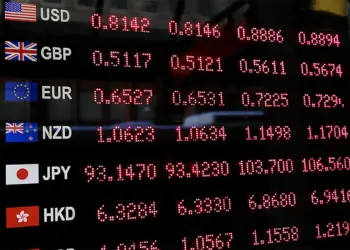
Now, let’s talk foreign exchange (forex) policy, another key area where economic policy touches banking. Nigeria, as you know, is an oil-dependent economy, and we’ve seen the effects of oil price fluctuations on the naira.

When oil prices drop, the value of the naira tends to plummet as well. This brings us to currency devaluation—a term many Nigerians are unfortunately all too familiar with.

Devaluation means the naira is worth less compared to other currencies, like the dollar or euro. Why does this matter to banks?

Well, banks are heavily involved in foreign exchange transactions, whether it’s facilitating trade, issuing foreign currency-denominated loans, or servicing multinational companies.

When the naira gets devalued, banks face a new challenge: their clients’ debts, if they’re in foreign currencies, suddenly become more expensive to repay.

l had a friend who took out a loan in U.S. dollars a few years ago. When the naira was stable, it seemed like a good idea—after all, the interest rate on the dollar loan was lower than anything available in naira. But when the naira weakened, suddenly his monthly repayments doubled!

He wasn’t the only one in this boat; many businesses faced similar struggles, and some even defaulted on their loans.

This kind of foreign exchange policy-induced risk forces banks to reconsider how they lend and manage their foreign currency reserves.

They need to hedge their risks carefully, but it’s easier said than done when the naira can swing wildly based on global oil prices or domestic economic policy.

The Cashless Policy: A Move Toward Modernization, But Not Without Growing Pains

You’ve probably noticed Nigeria’s push toward a cashless economy. With policies aimed at reducing cash-based transactions, the CBN has been working hard to modernize the banking system. On the surface, this sounds like a great idea—and it is!

Moving toward digital payments can help curb corruption, improve transaction transparency, and ultimately make life easier for everyday Nigerians. But, as with any big policy shift, there are challenges.

The introduction of the cashless policy came with limits on withdrawals, additional charges on large cash deposits, and incentives for using electronic transactions.

Banks were suddenly required to adapt, investing heavily in new technologies and infrastructure to support online banking, mobile payments, and digital wallets.

While the larger banks managed this transition relatively well, smaller banks and microfinance institutions struggled. They simply didn’t have the resources to scale up their technology as fast as the policy demanded.

l remember trying to send money to a vendor through an app shortly after the cashless policy was implemented. The transaction failed three times in a row, and l ended up having to physically visit my bank to complete the payment.

The staff at the bank looked just as frustrated as l was—they were trying to handle an influx of customers while juggling the new policy changes.

But over time, things have improved. Mobile banking apps are more reliable, and online transactions are becoming the norm for many Nigerians.

ln fact, according to recent reports, Nigeria is now Africa’s largest digital payments market. lt’s a huge win, but one that came with a lot of teething problems along the way.

Fiscal Policy: How Government Spending Affects Banks

While monetary policy grabs most of the headlines, fiscal policy—the government’s decisions on how much to spend and where—also has a big impact on the banking sector.

When the government increases spending, especially on infrastructure projects, it often funds these efforts through borrowing. And guess where the government borrows from? You guessed it—banks!

This can be a double-edged sword for the banking industry. On one hand, government borrowing can be a lucrative business. Government bonds are considered safe investments, and banks can earn a steady return by buying these bonds.

But on the flip side, when the government borrows heavily, it can crowd out private borrowers. ln other words, there’s less money available for businesses and individuals to borrow because the banks are too busy lending to the government.

lt’s a situation l’ve witnessed firsthand. A few years ago, during a period of heavy government borrowing, a colleague of mine was trying to get a loan for a real estate project.

Despite having good credit and a solid business plan, he was repeatedly denied by multiple banks. The reason? The banks were focused on government securities, which offered lower risk and easier returns.

The Hopeful Future: A More Resilient Banking Sector

Despite the challenges posed by economic policy, l remain optimistic about the future of banking in Nigeria.

Recent reforms, such as the push toward a cashless society and efforts to stabilize the naira, indicate that the government is aware of the issues and is working to modernize the system.

Banks, for their part, are becoming more resilient. Many are adopting advanced technologies like blockchain, Al-driven credit scoring, and improved mobile platforms to serve their customers better.

Moreover, as competition among banks heats up, particularly with the rise of fintech companies, we can expect to see more innovation in the sector.

Fintech is disrupting traditional banking in exciting ways, making financial services more accessible to the unbanked and underbanked populations across Nigeria.

With increased competition, banks will have no choice but to step up their game, offering better services and more customer-friendly policies.

Final Thoughts: Navigating the Ever-Changing Landscape

ln conclusion, the impact of economic policy on banking in Nigeria is far-reaching and complex.

From inflation control and interest rate adjustments to foreign exchange management and cashless initiatives, every policy decision shapes the way banks operate—and by extension, how we interact with our money.

For us, as individuals and business owners, it’s essential to stay informed about these policies and how they might affect our financial decisions.

Whether you’re planning to take out a loan, invest in a business, or simply manage your savings, understanding the relationship between economic policy and banking can help you navigate the ever-changing financial landscape.

While it’s easy to get frustrated by the slow pace of progress, l believe that Nigeria’s banking sector is on the cusp of transformation.

The journey won’t be without its hurdles, but the future looks promising—especially as technology continues to play a bigger role in shaping a more efficient, customer-friendly banking environment. Let’s just hope the policies keep pace!
Sarah David

Sarah David

Sarah David is an acclaimed financial, business, telecom and tech author whose work delves into quantitative finance and market analytics. Her publications are renowned for their rigorous analysis of algorithmic trading and the impact of global macroeconomic trends on financial markets.

Related Posts

NCR-Nigeria-1
Banking

Market Momentum: Top 10 Nigerian Stocks with the Highest Year-to-Date Returns in 2026

May 28, 2026
NGX
Banking

The Wealth Shift: Nigerian Stocks Evolve into a Primary National Savings Component

April 30, 2026
zenith bank
Banking

Zenith Bank Shatters Records: FY2025 Profit Hits ₦1.26 Trillion with Massive ₦8.75 Dividend Proposal

April 25, 2026
Afreximbank- HQ
Banking

Geopolitical Shield: Afreximbank Approves $10 Billion Facility to Buffer Global Conflict Shocks

April 24, 2026
Next Post
Banker

Economic Policy: The Engine Driving Nigerian Banking

Recommended.

cyber threat

The Real Truth About Network Security in 2025: What Your lT Guy lsn’t Telling You (A Field Report From the Cyber Trenches)

August 24, 2025
Valentines-Day

Love in a Tight Economy: 10 Valentine Dates in Lagos Under N50,000

February 7, 2026

Trending.

NGX

Q1 Champions: The 10 Best-Performing Nigerian Stocks of 2026

April 15, 2026
Registrars

The Gatekeepers of Equities: Top 10 Registrars Serving Nigeria’s Listed Companies

February 26, 2026
Dame zenith Bank MD 1

The Zenith Queen: Dame Adaora Umeoji’s Billion-Naira Bet on Herself

August 24, 2025
Wigwe Uni

Nigeria’s Most Expensive Private Universities: Top 5

August 24, 2025
hostafrica best webhosting in southafrica web services

All You Need to Know About HostAfrica: My Unbiased Experience and Review

August 24, 2025
The Zenith Magazine Main Logo

The Zenith Magazine. Everyday, we celebrate the achievements of ace professionals, feature thrilling stories of top academics, spotlight worthy industry innovations, and share the inspiring stories behind successes. Meet deservedly workplace celebrities.

Follow Us

Categories

  • Academics
  • Agriculture
  • Banking
  • Biotech
  • Business
  • Careers
  • Edutech
  • Features
  • Fintech
  • International
  • Opinions
  • Students
  • Tech
  • Telecom

Recent News

NCR-Nigeria-1

Market Momentum: Top 10 Nigerian Stocks with the Highest Year-to-Date Returns in 2026

May 28, 2026
NGX

The Wealth Shift: Nigerian Stocks Evolve into a Primary National Savings Component

April 30, 2026
  • About
  • Contact
  • Advertise
  • Terms and Conditions
  • Privacy & Policy
  • Disclaimer
  • Ads Disclaimer
  • Copyright lnfringement

© 2025-2026 | The Zenith Magazine. All Rights Reserved.

No Result
View All Result
  • Home
  • Academics
  • Business
  • Banking
  • Tech
    • Fintech
    • Edutech
    • Biotech
  • Students
  • Telecom
  • Features
  • Opinions
  • lnternational

© 2025-2026 | The Zenith Magazine. All Rights Reserved.

This website uses cookies. By continuing to use this website you are giving consent to cookies being used. Visit our Privacy and Cookie Policy.