

























MELBOURNE — From the frozen steppes of Siberia to the rugged wilderness of Tasmania, the line between extinction and existence is beginning to blur.
Armed with the Nobel Prize-winning “genetic scissors” of CRISPR-Cas9, a new generation of scientists is moving beyond fossil discovery and into the realm of biological resurrection.
The mission is no longer purely academic. Supported by massive private investment from firms like Colossal Biosciences, researchers are attempting to undo human-driven extinctions, ranging from the striped Tasmanian tiger to the iconic woolly mammoth.
The Genetic Jigsaw: Engineering a Thylacine
Leading the charge for the Thylacine (Tasmanian tiger) is Andrew Pask, a geneticist at the University of Melbourne. Unlike dinosaurs, whose DNA has long since degraded, thylacine samples are remarkably fresh.
Some “miracle specimens”—babies preserved in alcohol nearly a century ago—have allowed Pask to sequence a nearly complete genome.
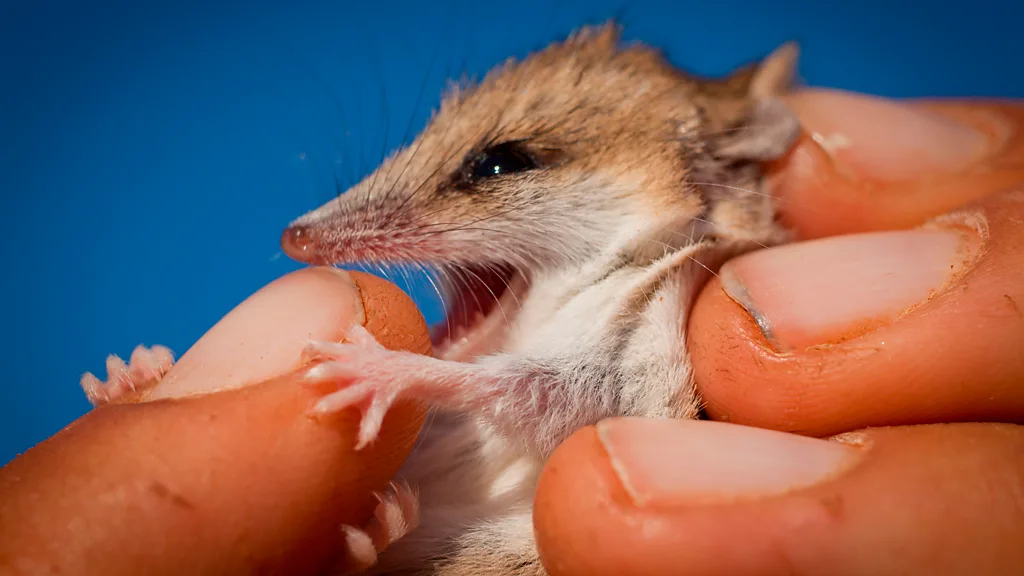
However, sequencing is only the first hurdle. To bring the animal back, scientists must use a “blueprint” from its closest living relative: the mouse-sized dunnart.
“We find everywhere where the dunnart’s genetic code is different from the thylacine,” Pask explains. Using CRISPR, scientists can “tweak” the dunnart’s living cells, editing millions of DNA sequences until they match the thylacine’s.
Once an engineered embryo is created, it must then be implanted into a surrogate mother or an artificial womb.
The “Mammophant” and the Climate Mission
While the thylacine represents a moral debt to a recently lost predator, the Woolly Mammoth project is being framed as a climate solution. By splicing mammoth DNA into the genome of the Asian elephant, Colossal Biosciences aims to create a “cold-resistant elephant.”
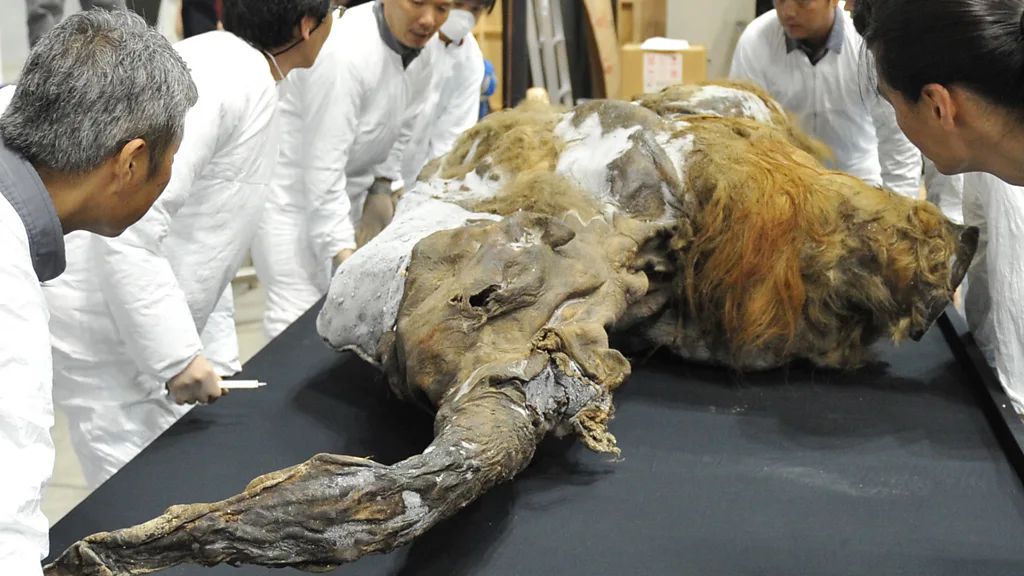
These hybrids, or “mammophants,” could theoretically be reintroduced to the Arctic tundra. Proponents argue their presence would trample snow and scrape away moss, allowing winter cold to reach the permafrost and preventing the release of trapped greenhouse gases.
Back-Breeding and Cloning: Alternative Paths
Genome editing isn’t the only tool in the shed. For the Auroch—a prehistoric cow that stood as tall as an elephant—scientists are using “back-breeding,” selecting modern cattle that still carry ancient genes to recreate the original beast.
For more recently lost species, like the southern gastric-brooding frog, cloning remains a viable option. In 2013, paleontologist Michael Archer successfully transferred a frozen nucleus into a living egg, watching under a microscope as a hybrid embryo began to divide for the first time.
The Ethical Frontier: Playing God or Playing Smart?
As the technology accelerates, so does the debate. Critics worry that reintroducing extinct species could destabilize current ecosystems or distract from the urgent need to save living animals on the brink.
However, the technology developed for de-extinction is already saving lives today. In North America, researchers have successfully cloned Elizabeth Ann, a black-footed ferret, using 30-year-old frozen cells to inject much-needed genetic diversity into an endangered population.
“It’s not about playing God,” says Archer. “This is about playing smart human by undoing what we did.”
The De-Extinction Toolkit
| Method | Target Species | The Living “Host” |
| CRISPR Editing | Thylacine, Mammoth | Dunnart, Asian Elephant |
| Back-Breeding | Auroch | Modern Cattle (Tauros) |
| Cloning (SCNT) | Gastric-Brooding Frog | Closely related Amphibians |
| Conservation Cloning | Black-Footed Ferret | Living Ferrets |
The Bottom Line
The science of de-extinction has moved from science fiction to a multi-million dollar industrial sector.
While the 2025 announcement of “dire wolf” puppies by Colossal Biosciences met with skepticism from the scientific community regarding their biological accuracy, the momentum is undeniable.
Whether these animals will roam the wild or remain “biological curiosities” in high-tech facilities is the next great question of the 21st century.