

























The world’s most powerful telescope just dropped its first images, and they’re absolutely breathtaking—the kind that make you stop scrolling and say “whoa.”
The $810 million Vera C. Rubin Observatory in Chile isn’t just another telescope; it’s a game-changer. With a 3.2-gigapixel sensor (that’s 64 times sharper than your iPhone!), this behemoth is about to revolutionize how we explore space over the next decade.
What Makes These Images Special?
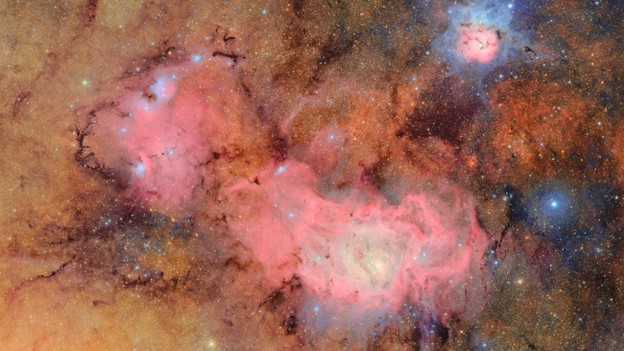
The first shots are simply stunning. We’re talking about the Trifid and Lagoon nebulae glowing in brilliant pinks against orange-red cosmic backdrops, captured in detail that makes previous images look like blurry vacation photos.
One debut image required 678 separate exposures over just seven hours—talk about dedication to getting the perfect shot!
But here’s what’s really impressive: in roughly 10 hours of operation, the observatory discovered 2,104 previously unknown asteroids, including seven that are relatively close to Earth. Don’t worry—none pose any danger to our planet.
“I’m absolutely blown away,” gushed Professor Catherine Heymans from the University of Edinburgh. “Just look, it’s teeming with gorgeous, glittering galaxies!”
The Numbers Are Mind-Blowing
This isn’t your average digital camera. At 2,800 kilograms and the size of a small car, the Legacy Survey of Space and Time (LSST) camera is the largest and highest-resolution digital camera on Earth. We’re talking about images so massive that you’d need 400 ultra-high-definition TVs to display just one at full size.
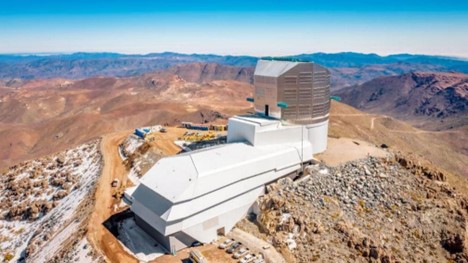
The mission? Survey the entire southern sky every three to four days for 10 years straight. The goal is to catalog 20 billion galaxies and capture everything that moves or changes in brightness across the universe.
What’s New?
Astronomers are particularly excited about the potential to solve some of the universe’s biggest mysteries. The observatory might finally provide answers about dark matter and dark energy—that mysterious 95% of space we barely understand.
There’s also the tantalizing possibility of discovering “Planet Nine,” a hypothetical world beyond Neptune that orbits the sun every 10,000 to 20,000 years.
The Rubin Observatory will also identify an estimated 90,000 new near-Earth asteroids, more than doubling our current catalog. Some might pose future threats to Earth, making early detection crucial for planetary defense.
How Helpful?
Like the substance that grows more potent with age, this telescope will perfect our understanding of the cosmos through years of patient observation. We’re entering what astronomers call a historic period of exploration and discovery—one that promises to transform how we see our place in the universe.
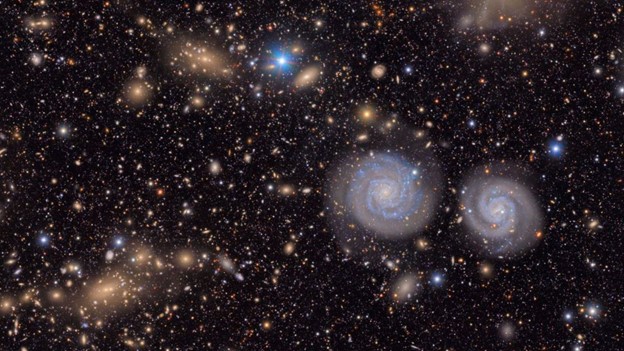
The greatest images of space that ever were or will be? That might not be an overstatement. With the Rubin Observatory now operational, we’re about to get a front-row seat to the greatest show in the cosmos, captured in unprecedented detail over the next decade.
The observatory’s images will be processed at three global data facilities, with the UK playing a major role in handling the expected 1.5 million images that will reveal roughly 10 billion stars and galaxies.