

























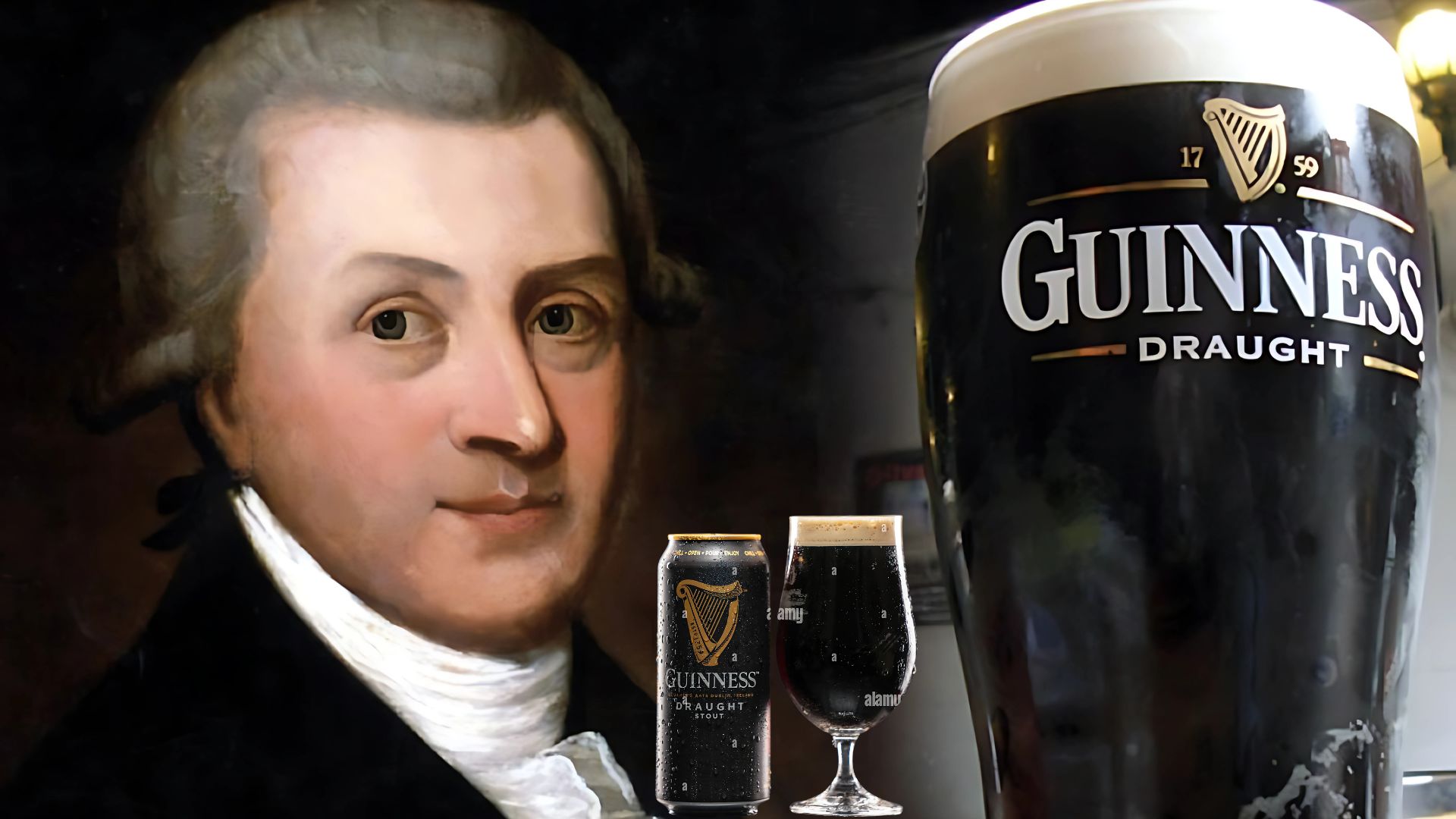
A great beer is more than just hops and barley—it’s liquid history. And no beer has a more outrageous origin story than Guinness.
In New Year’s Eve, 1759. While most people are nursing hangovers and making resolutions they’ll break by February, a 34-year-old Irishman named Arthur Guinness is doing something absolutely bonkers.
He’s signing a lease. Not just any lease, mind you—a nine thousand year lease on a rundown brewery in Dublin.
Nine. Thousand. Years.
Let that sink in for a moment. This man had such unshakeable faith in his vision that he committed his family line to brewing beer until roughly the year 10,759.
Talk about thinking long-term! Most of us can barely commit to a Netflix subscription for a year, and Arthur Guinness just casually signed away millennia.
The Man Who Fought Dublin With a Pickaxe
Arthur wasn’t just a dreamer—he was a fighter. When Dublin Corporation tried to cut off his water supply (apparently they thought he was using too much), Arthur literally grabbed a pickaxe and went full medieval on them.
Historical records note that he “violently rushed upon them, wrenching a pickaxe from one and declaring with very much improper language, that they should not proceed.”
I love this so much. Here’s a businessman so passionate about his craft that he’s ready to throw down with city officials over water rights. That’s the kind of entrepreneurial spirit that built empires—and apparently, really good beer.
The Harp That Started It All
Here’s a mind-blowing fact that’ll make you the most interesting person at your next pub quiz: Guinness actually trademarked the Irish harp before Ireland did.
When the Irish Free State was established in 1922, they had to flip their national emblem to face the opposite direction because Guinness had already claimed the original design!
Imagine being such a marketing genius that you force an entire country to redesign their national symbol. That’s next-level branding right there.
The harp design has evolved over the decades, losing strings along the way like a guitar that’s been through too many rock concerts. Designer Gerry Barney gave it major makeovers in 1968 and 2005, proving that even centuries-old logos need a refresh now and then.
When Quality Control Meant Risking Your Life
Nowadays, quality control means sending emails and checking spreadsheets. In the 1890s? It meant sailing around the world on steamships, battling storms and seasickness, all to make sure Guinness was being served properly.
These fearless quality inspectors documented everything in diaries that read like adventure novels. Take Arthur Shand’s 1904 report from Sydney: he noted that most stout arrived “by sailing vessels” and praised merchants for understanding “the importance of cool storage.”
Meanwhile, from Boston in 1911, he was thrilled to find “over 70 places drawing Extra Stout in the City” with perfect ice-box temperatures.
Can you imagine putting “survived multiple ocean voyages to ensure beer quality” on your LinkedIn profile? These guys were the original craft beer evangelists, except their mission field was literally the entire globe.
The Philanthropy That Built a Legacy
Arthur Guinness understood something that modern corporations are still trying to figure out: taking care of your community isn’t just good karma—it’s good business.
The Guinness family didn’t just brew beer; they transformed Dublin. They restored St. Patrick’s Cathedral, bought St. Stephen’s Green (which was basically a private park for rich people) and donated it to the city so everyone could enjoy it.
They built affordable housing, established Ireland’s first crèche, and created a medical center that provided free healthcare to employees and their families.
In 1870! This was revolutionary stuff. While other employers were squeezing every penny from workers, Guinness was paying 10% above average wages, offering paid holidays, free meals, annual excursions, and even a beer allowance. (Because of course they did.)
Africa: Where Guinness Became Something Bigger
Here’s where the story gets really fascinating. Guinness didn’t just export beer to Africa—it evolved there, becoming something uniquely suited to long sea voyages and tropical climates. Guinness Foreign Extra Stout was specifically engineered to survive those brutal months-long journeys by ship.
The first shipment hit Sierra Leone in 1827, and by 1962, Nigeria had its own Guinness brewery—the first outside Ireland and the UK. Today, Nigeria is the world’s second-largest market for Guinness. Think about that: a beer born in the rainy streets of Dublin found its soul in the vibrant markets of West Africa.
The Plot Twist Nobody Saw Coming
Just when you think you know the story, there’s a curveball. Recently, Diageo (Guinness’s parent company) sold majority control of Guinness Nigeria to Singapore-based Tolaram Group. Cue the internet panic: “Is Guinness leaving Nigeria?!”
The answer? Absolutely not. Guinness Nigeria had to release a statement essentially saying, “Guys, chill. We’re not going anywhere.” They’re doubling down on their Nigerian operations with new investments and innovations like Malta Guinness Low Sugar.
It’s a reminder that even centuries-old brands have to navigate modern global business realities—but the core mission remains the same.
Why This All Matters
Arthur Guinness’s 9,000-year lease wasn’t just business bravado—it was a statement of faith in something bigger than himself. He believed so deeply in his vision that he was willing to bet his entire family’s future on it.
That kind of audacious thinking is exactly what we need more of today. Too many businesses think in quarters, not centuries. Too many entrepreneurs plan exits before they’ve even built something worth staying for.
Every time you raise a pint of Guinness, you’re not just drinking beer—you’re participating in a 265-year conversation that started with one man’s impossible dream and continues in breweries from Dublin to Lagos.
Now that’s what I call a legacy worth toasting.
Sláinte, Arthur. The lease is still paying dividends.