






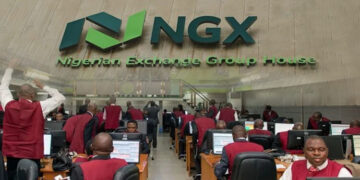
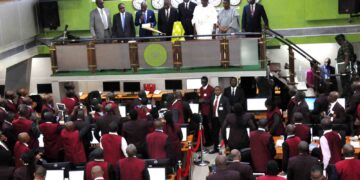













In the bustling Lagos Island office of Trinity Capital, Chief Investment Officer, Taiwo Adebayo, finds himself in an unusual position: waiting.
The ticker tape ticks on, market analysts huddle around screens, but the fuel that typically powers their decisions—a fresh news report, an economic indicator—is missing. This week, the Nigerian market is bereft of its usual catalysts, and investors like Adebayo are finding themselves in a holding pattern.
The Nigerian Exchange All-Share Index, a barometer of the nation’s economic pulse, is known for its reactivity, its fluctuations often echoing the latest earnings report or whispered Central Bank policy shifts.
But today, the Index hovers around the 36,000 mark, unchanged from the previous week, as the market awaits the usual input.
The naira sits at ₦1,400 to the dollar on the parallel market, a position it has maintained, held in place by the absence of any compelling arguments to push it one way or another.
Traders at First Holdings and Zenith Bank, usually arbitering liquidity, find themselves in wait-and-watch mode, their decisions forestalled by the lack of fresh data.
The silence, though unusual, is not crippling. The market continues to function, albeit at a lower volume and with a palpable caution.
The absence of news is itself a signal—one that experts are quick to interpret. “The market is showing remarkable resilience,” notes Adebayo. “It’s a reminder that our fundamentals are solid. We’re not just riding the waves of headlines.”
In the absence of new narratives, certain sectors feel the void acutely. Media outlets, usually busy decoding the latest market movements, find themselves with less to report. Advisorial firms, typically framing the market’s latest trends, are left to rehash previous insights.
The banking sector, lacking new earnings reports or CBN circulars, struggles to reprice risk assets, valuations held static by the information vacuum. Manufacturing firms, craving policy clarity, stall their capital expenditure plans.
Yet, this stall is not a stop. Long-term investors, unperturbed by the ebb of news, maintain their positions, their strategies anchored in macroeconomic realities, not fleeting stories.
In five years, we may look back at this week as a testament to the Nigerian market’s growing maturity. The market’s ability to withstand the silence, to function without constant nourishment from news cycles, signals a shift.
It points towards a future where traders are less reactive, more selective in their news intake, where the focus is less on the latest headlines and more on the enduring fundamentals.
In this future, the Nigerian market will be more robust, less fickle, a reflection not just of the news of the day, but of the nation’s true economic health.