























LAGOS — In a sector often characterized by informal trading and fragmented supply chains, AgroEknor has emerged as a rare case study in institutional scaling. Founded in 2013, the company has spent over a decade evolving from a small-scale exporter into a vertically integrated powerhouse.
By February 2026, the company’s journey from a $1 million seed round to a ₦100 billion Commercial Paper (CP) programme has become a recognized blueprint for how African agribusinesses can move beyond “raw exports” to become globally competitive, institutionally financed enterprises.
The 12-Year Capital Evolution (2013–2025)
Under the leadership of CEO and Co-founder Timi Oke, AgroEknor’s growth has been fueled by a strategic mix of equity, development finance, and capital market instruments.
| Year | Milestone | Capital Source | Strategic Impact |
| 2013 | Seed Phase | $1M (Founders & Angels) | Established sourcing networks and export rails. |
| 2016 | Expansion | ₦750M (NEXIM & DBN) | Scaled processing capacity; shifted toward institutional governance. |
| 2021 | Equity Validation | $2.5M (Aruwa Capital) | Validated the “farm-to-brand” model; expanded into US/Mexico. |
| 2025 | CP Credibility | Series 1 & 2 Repayment | Proved financial discipline; unlocked institutional debt markets. |
| 2026 | Scaling Phase | Acumen Investment | Accelerating global rollout of “Madala” and YieldPro tech. |
Pillars of the Scaling Blueprint
AgroEknor’s success isn’t just about money; it’s about “Backward Integration” and “Value Addition.”
1. The Farm-to-Brand Model
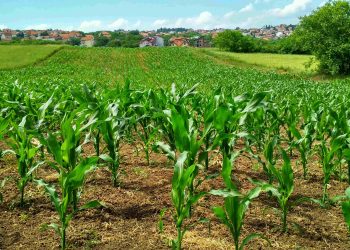
Unlike traditional traders who wait at the port, AgroEknor works directly with over 7,000 smallholder farmers (70% of whom are women). Through its FEEP (Farmers Education and Empowerment Program), the company provides:
- Climate-smart training to improve yields.
- Traceability through its YieldPro technology.
- Guaranteed Off-take, ensuring farmers graduate from subsistence to commercial viability.
2. Mastering the “Niche” (Hibiscus & Fonio)
The company focused on commodities where it could achieve market leadership. Nigeria is one of the world’s top producers of hibiscus, yet much of it was exported raw.
AgroEknor invested in NAQS-accredited fumigation chambers—one of only seven in the country—allowing it to meet the stringent safety standards of the US and Mexican markets.
3. Tapping the Debt Capital Markets (DCM)
The launch of its ₦100 billion Commercial Paper programme, led by United Capital, represents a coming-of-age for Nigerian agribusiness.
By successfully repaying earlier series in 2025, AgroEknor proved that agricultural ventures can be “bankable” and disciplined, paving the way for other local firms to access low-cost, structured local currency funding.
The “Madala” Diversification
By 2026, AgroEknor is no longer just a commodity player. Its flagship brand, Madala (a hibiscus-based wellness beverage), is its bridge to the consumer goods market.
Backed by new investment from the Acumen impact fund, the company is scaling Madala globally, proving that African “superfoods” can compete on retail shelves in Texas just as easily as they do in Kano.
AgroEknor 12-year Journey
AgroEknor’s 12-year journey proves that the “missing middle” in African agriculture can be filled through institutional discipline.
By combining patient equity with structured debt and a relentless focus on the farmer, Timi Oke and his team have built a model that protects against currency volatility while capturing maximum value within the continent.