















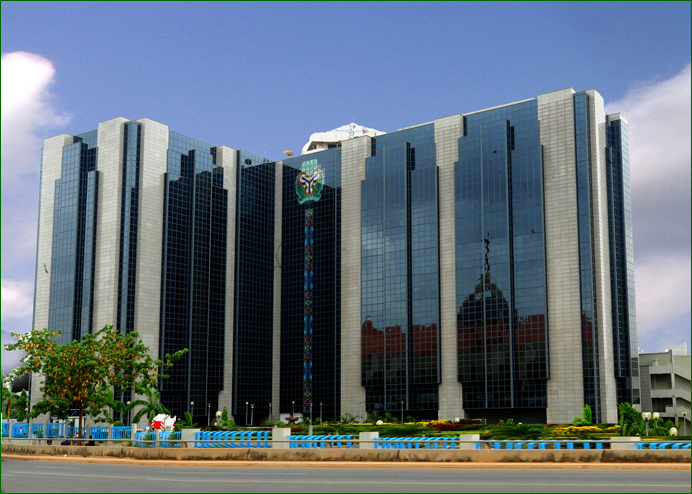
ABUJA — The landscape of Nigerian banking has undergone a seismic shift. As of February 24, 2026, 20 commercial banks have collectively raised a staggering ₦4.05 trillion in new capital, moving them within striking distance of the Central Bank of Nigeria’s (CBN) stringent new minimum capital requirements.
Following the directive issued by Governor Olayemi Cardoso in 2024, banks have utilized a mix of rights issues, public offers, and private placements to fortify their balance sheets. With the final deadline of March 31, 2026, fast approaching, the industry is entering its final “consolidation sprint.”
The Capital Leaderboard: Who Raised What?
The fundraising efforts have been dominated by the Tier-1 “FUGAZ” banks (First Bank, UBA, GTCO, Access, and Zenith), but several Tier-2 players have surprised the market with oversubscribed offers.
| Bank Group | Capital Raised (Est.) | Strategy Employed |
| Zenith Bank | ₦620 Billion | Rights Issue & Public Offer |
| Access Holdings | ₦580 Billion | Global Depository Receipts & Rights |
| GTCO (GTBank) | ₦545 Billion | Combined Public Offer |
| FBN Holdings | ₦490 Billion | Rights Issue |
| UBA | ₦460 Billion | Private Placement & Rights |
| Other 15 Banks | ₦1.35 Trillion | Mergers, Private Equity, & Public Offers |
Strategic Shifts: Beyond the Numbers
The ₦4.05 trillion infusion is doing more than just satisfying a regulatory checkbox; it is fundamentally changing how Nigerian banks operate in 2026.
1. The “Trillion-Naira” Economy Goal
The CBN’s primary goal was to create banks capable of supporting a $1 Trillion Nigerian economy.
With these new capital levels, banks now have the “legal lending limit” to finance massive infrastructure projects, such as the Lagos-Calabar Coastal Highway and the expansion of the Dangote Refinery, without breaching single-obligor limits.
2. The M&A Wave
Not all of the 20 banks raised their capital independently. The ₦4.05 trillion figure includes capital injections resulting from three major mergers finalized in late 2025.
Smaller banks that could not meet the ₦200 billion (National) or ₦500 billion (International) thresholds on their own have opted to fold into larger entities, reducing the total number of players but increasing the stability of the system.
3. Tech and Dividend Dilution
While the capital raise is a win for stability, it presents a challenge for shareholders.
- Dilution: The massive issuance of new shares means that Earnings Per Share (EPS) will likely be “watered down” in the short term.
- Tech Pivot: Banks are earmarking approximately 25% of the new capital for “Digital Transformation 2.0,” focusing on AI-driven lending and cybersecurity to compete with high-growth fintechs like Moniepoint and OPay.
The Final Countdown: March 31 Deadline
| License Category | Minimum Capital | Status of Top 20 |
| International | ₦500 Billion | 7 Banks Cleared |
| National | ₦200 Billion | 11 Banks Cleared |
| Regional | ₦50 Billion | 2 Banks Cleared |
Note: Several banks are still awaiting final SEC and CBN verification for their most recent tranches of capital.
The ₦4.05 trillion
The successful mobilization of ₦4.05 trillion is a massive vote of confidence in the Nigerian financial system. Despite the high-interest-rate environment of 2025, investors—both local and international—have bet heavily on the future of Nigerian banking.
As the dust settles on this recapitalization exercise, Nigeria will boast some of the most well-capitalized financial institutions in Africa, ready to lead the continent’s credit expansion.